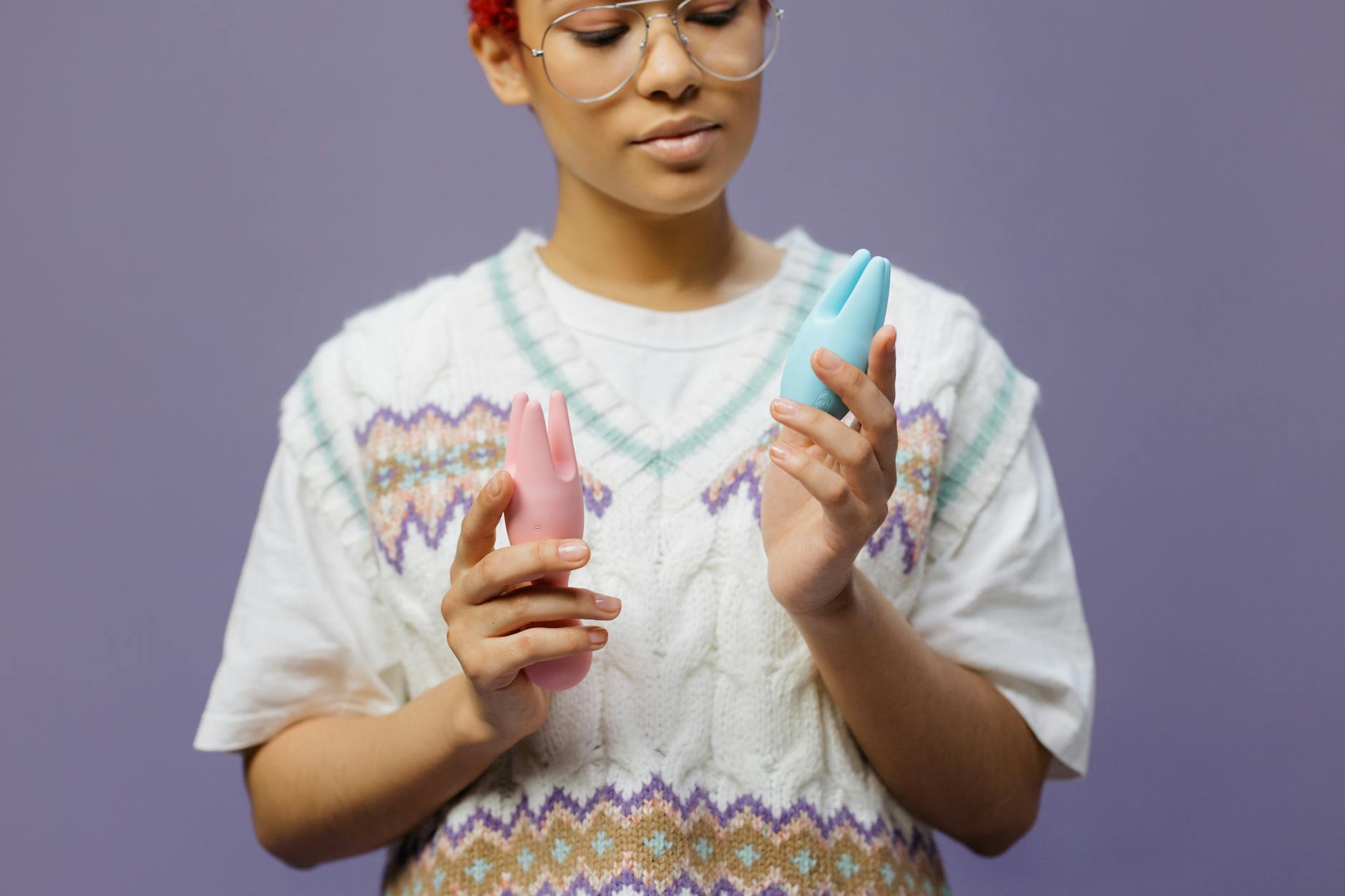
Let's be real about vibrator fade
You loved your lemon vibrator the first time you used it. Three weeks in, it still works perfectly fine—but something feels off. The intensity that made you gasp now just feels like a pleasant hum. You're not broken, and neither is your toy. This is called sensory adaptation, and it's one of the most common questions people ask about clitoral vibrators.
The short answer: yes, it can happen. But the longer answer is way more useful because the fix isn't complicated, and you don't have to choose between your pleasure and keeping the sensation fresh.
What sensory adaptation actually is (and isn't)
Sensory adaptation happens when your nervous system stops registering a stimulus as novel or urgent. Your skin has specialized nerve endings that detect vibration, pressure, and movement. When those nerves are stimulated the same way repeatedly, they stop firing as intensely. It's the same reason you stop noticing background noise or the feeling of your shirt against your skin after a few minutes.
This is a normal neurological response, not a sign of permanent damage or desensitization in the clinical sense. Your clitoris hasn't become less sensitive overall. Your nerves have just gotten used to this particular pattern of stimulation from your lemon vibrator or lem vibrator.
Here's the important distinction: true sexual desensitization (where pleasure itself diminishes) is different from pattern fatigue. Pattern fatigue is your brain saying "okay, I know this rhythm already." Your pleasure capacity? Completely intact.
Why it happens faster with some toys than others
The Lemon's suction-based technology actually has an advantage here. Because it mimics a specific biological motion rather than just buzzing at one frequency, people often report that the sensation stays fresher longer compared to traditional vibrators. But any toy used the same way, the same intensity, in the same session length can trigger adaptation.
Timing matters too. If you use your lemon clitoral vibrator for 45 minutes straight at pattern level 5, your nerves will adapt faster than if you use it for 15 minutes at varying intensities. The repetition and duration are the culprits, not the toy itself.
Your body also changes. Stress, hydration, where you are in your cycle, whether you're on medications that affect sensation—all of these shift how your nervous system responds to stimulation. What felt electric last month might feel subdued this week, even if you haven't changed anything about your technique.
The pattern-switching strategy that actually works
Instead of taking weeks off your lemon adult toy (which feels punitive and isn't necessary), change the pattern every few sessions. If you've been using the Lemon's main suction mode, switch to pulse or wave mode. If you always use intensity level 3, try level 2 for a week. Varying the stimulus is what breaks the adaptation cycle.
You can also experiment with different types of touch leading up to clitoral stimulation. Some people find that indirect stimulation (touching around the clitoris rather than directly) or combining the toy with partnered touch resets the sensation. Your nervous system perks up when something is genuinely different.
Timing changes help too. If you always use your toy in the evening, try morning sessions. If you typically spend 30 minutes, try 10 intense minutes instead. These shifts keep your body curious about what's coming next.
Why taking breaks might feel necessary (but usually isn't)
Some people swear that taking a week or two away from their lemon vibrator brings the sensation roaring back. And they're right—a break does reset adaptation. But you don't need a week-long abstinence to get the same result. Strategic pattern changes and intensity variation do the job without requiring you to put your pleasure on pause.
If you do take a break, make it intentional and short. Three to five days away from your Lemon toy, followed by a return to varied patterns, often delivers the same sensation reset as a longer absence. The key is what you do when you come back: commit to mixing up your approach instead of falling back into the exact same rhythm.
One more thing: if you're using your lemon sexual toy as a stress relief tool or as a way to process emotions, taking breaks might feel emotionally harder than it is physically necessary. That's worth naming. Your pleasure isn't selfish, and you don't have to sacrifice regularity to keep sensation fresh.
How to know if it's adaptation versus something else
True adaptation feels like a general dampening of sensation across all intensity levels. The toy still works, but the response feels flatter. If instead you're experiencing pain, numbness that doesn't go away, or a sudden loss of sensation that feels abnormal, that's different and worth checking with a doctor.
Adaptation also tends to happen gradually over weeks, not suddenly. If your toy felt great yesterday and feels completely numb today, that's likelier a technical issue (low battery, connection problem, toy damage) than nervous system adaptation.
You can test this by trying a different toy briefly. If that also feels muted, it's probably adaptation. If it feels normal, your Lemon toy might need charging or cleaning.
The real reason sensation fades (and how to prevent it)
Honestly though, sensation fade is often more psychological than physiological. If you're using your lemon sucker in a rush, while stressed, or during a period when you're not really present—your brain won't encode it as intensely interesting. Novelty isn't just about the toy's pattern. It's about your attention.
The people who report the freshest sensation consistently are the ones who occasionally slow down and bring intention to the experience. You don't need to meditate before touching yourself, but a few minutes of actual mental settling can make an enormous difference in how pleasure registers.
Combining your clitoral vibrator with other sensations also helps. Penetration, partnered touch, different positions, fantasies—your nervous system lights up when it's processing multiple inputs simultaneously. That complexity is its own reset button.
Frequency matters less than you think
You might assume that using your lemon vibrator less often prevents adaptation. Actually, the research suggests frequency matters way less than pattern variation. Someone who uses their lem vibrator five times a week but rotates intensity and patterns stays fresher longer than someone who uses their toy twice a week in exactly the same way.
Use your toys as much as you want. Just make it a rule to change at least one variable each time. Different position, different pattern, different intensity, different duration—pick one or combine a few. That's legitimately all it takes to keep sensation crisp.
When to reach out for support
If you've tried varying your approach and sensation still feels persistently muted across multiple toys and multiple weeks, that's worth mentioning to a healthcare provider. Certain medications, hormonal changes, pelvic floor tension, and other factors can genuinely flatten sensation in ways that aren't just adaptation. A good GP or a pelvic floor specialist can help rule those out.
Same goes if pleasure itself has dimmed—not just the intensity of physical sensation, but the emotional satisfaction or desire. That's a different conversation, and usually points to something like stress, relationship dynamics, or sometimes depression, rather than a toy problem.
FAQ: Questions people actually ask
Can I permanently damage my sensitivity by using my lemon vibrator too much?
No. Temporary adaptation isn't permanent damage. Your nervous system rebounds. Even people who use clitoral vibrators daily for years report that sensation stays responsive as long as they're varying their approach. The clitoris is resilient.
Is it normal that my partner's touch feels less intense than my lemon clitoral vibrator?
Completely normal. A suction toy or vibrator delivers consistent, controlled stimulation that a hand can't replicate. This doesn't mean partnered touch is "worse"—it's different. Many people enjoy both for different reasons. If you want partnered touch to feel more intense, communicate about speed, pressure, and technique.
How long does sensory adaptation usually take to develop?
It varies, but typically people start noticing a shift around three to six weeks of regular use in the same pattern. Some notice it within two weeks if they're using the toy frequently in exactly the same way. Others don't notice it for months because they naturally vary their approach.
Should I switch to a different lemon adult toy if mine stops feeling intense?
Not necessarily. Switching toys can feel fresh temporarily, but you'll likely hit the same adaptation pattern with a new toy if you use it the same way. It's worth trying pattern variation first. That said, having multiple toys with different sensations (a lemon sucker, a wand vibrator, a different style) gives you built-in variety if you like rotating.
Does taking breaks actually reset sensation faster than changing patterns?
Breaks do reset adaptation, yes. But three to five days away combined with pattern change works about as well as a two-week break with no change. You're not trading pleasure time for sensation freshness. You're choosing intentional variation instead.
Can I use my lemon vibrator too much?
Not for adaptation reasons. Use it as much as you want. The only real limit is listening to your body—if you're experiencing actual irritation, numbness that concerns you, or pain, ease up. Otherwise, frequency isn't the problem. Pattern repetition is.
The bottom line
Your lemon vibrator is still working. Your clitoris is still responsive. What's actually happening is your nervous system getting comfortable with a familiar pattern—and that's a feature you can work with, not a flaw you're stuck with. Vary your intensity, your patterns, your position, your duration, and the context. Keep yourself curious. Your sensation will stay sharp, and your pleasure stays something you control.