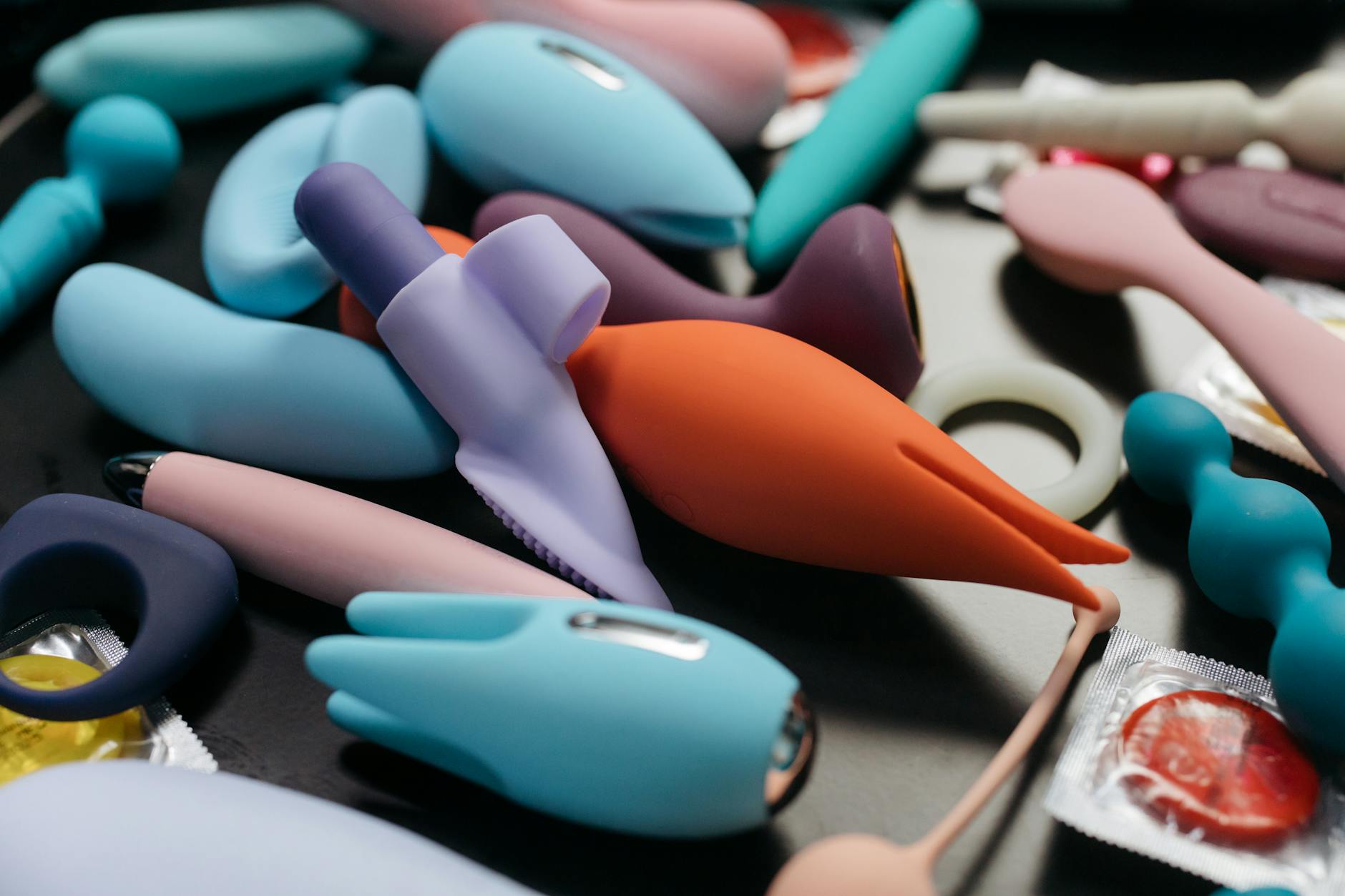
Your body isn't static. If you've ever noticed that touch feels different mid-cycle than it does at the start of your period, you're not imagining it. Hormonal fluctuations directly affect tissue sensitivity, lubrication, blood flow, and how quickly arousal builds. Lemon clitoral vibrators feel different depending on where you are in your cycle, and understanding that difference changes everything.
Estrogen and progesterone create a rhythm in how your body responds to touch. During the first half of your cycle (the follicular phase), estrogen is climbing. Tissues are plumper, more vascularized, and more sensitive. Your clitoris swells slightly as blood flow increases. This is when many people report that a lemon vibrator feels intensely pleasurable, almost too much, and they want lower intensities or slower patterns.
Then ovulation hits. Your body releases a surge of luteinizing hormone (LH), sensitivity peaks, and arousal can feel almost involuntary. This is often when people reach orgasm most easily and intensely.
In the second half of your cycle (the luteal phase), progesterone rises while estrogen dips. Tissues thin slightly. Blood flow decreases. Your clitoris is less engorged. This is when people often report needing higher intensity on their lemon vibrators, longer warm-up time, and more direct stimulation. If you usually love a gentle setting, you might find it barely registers during the luteal phase.
Then your period arrives. Tissues are shedding, hormones are at their lowest, and sensation shifts again. Many people find pleasure during menstruation intensely satisfying because the clitoris is still sensitive, even though overall arousal might feel muted.
The design of clitoral vibrators like the Lem matters here. Air-suction technology doesn't rely on direct friction the way traditional vibrators do. Instead, it creates a rhythmic pulse of pressure around the clitoral area.
Why this matters: during phases when your tissues are thinner or less engorged, direct vibration can feel harsh or overstimulating. Suction-based stimulation reaches deeper nerve endings without requiring your clitoris to be maximally swollen. The sensation changes, but it works across your entire cycle without requiring you to switch devices.
You're still working with the same lemon vibrator, but how you use it shifts with your body.
If you track your cycle (or notice patterns), here's the practical rhythm most people discover:
Follicular phase and ovulation. Start on pattern 1 or 2. Your tissues are more sensitive, and you might find that jumping straight to a higher intensity feels too intense. Many people who use lemon vibrators during this phase report that they prefer slower, sustained patterns rather than rapid pulses. You can always increase intensity, but you can't un-feel overstimulation.
Luteal phase. Most people shift to patterns 3 or 4, or use longer warm-up sessions at lower patterns. Your body needs more stimulation to reach the same sensation threshold, which is completely normal and not a sign that something is wrong. The pathway to orgasm is longer, but it's often deeper and more full-body when you reach it.
Menstruation. You might land somewhere in the middle, depending on how heavy your flow is. Some people find that during their period, pleasure is incredibly accessible because the clitoris is still highly innervated even though arousal hormones are low. Others prefer to take a break. Both are fine.
Cervical mucus production tracks with your cycle. During ovulation, your body produces abundant, slippery mucus. This natural lubrication reduces friction and makes external stimulation feel smoother.
During the luteal phase and menstruation, mucus decreases. The vulvar tissue itself is also less naturally lubricated when progesterone is high. This is where water-based lube becomes essential, not because your body is broken, but because the environment has changed. Adding lubrication during your luteal phase isn't a workaround. It's working with your body's actual needs.
Keep a water-based lube like coconut oil or a commercial option next to your lemon vibrators. Not every session requires it, but having it available means you're never fighting your body's natural state.
Here's something most people don't talk about: the time it takes to become aroused genuinely shifts throughout your cycle. During ovulation, arousal can build in 2-3 minutes. During the luteal phase, you might need 10-15 minutes before your body feels responsive.
This is not low libido. This is your body working exactly as it's supposed to, with different starting conditions.
If you're using a lemon vibrator and feeling frustrated that it's not working, check where you are in your cycle. You might not need a different toy. You might just need to give yourself more time, start at a lower intensity, or use more lubrication. The lem vibrator works across all these phases, but it works best when you're not fighting your body's actual readiness.
Many people find that once they map their sensation patterns to their cycle, using lemon clitoral vibrators becomes more intuitive and pleasurable. You're not learning to fight your body's rhythms. You're learning to move with them.
You might notice that you prefer solo sessions during ovulation because arousal feels automatic and intense. You might prefer partnered situations during your luteal phase because the longer warm-up time creates more of a shared experience. You might discover that your period is actually a window for the kind of pleasure you rarely access at other times.
This information is purely for you. There's no "best" time to use lemon sexual toys. There's just your actual body, moving through actual hormonal changes, and figuring out what feels good when.
Can hormonal birth control change how a lemon vibrator feels? Yes. Hormonal contraceptives suppress the natural cycle, so sensation might stay more consistent, but you could lose some of the intensity peaks that come with ovulation. Some people prefer this stability. Others miss the variation. If you've recently started or changed birth control and lemon vibrators feel different, give it 2-3 months for your body to settle before deciding if it's the right fit.
Should I stop using lemon vibrators during my period? Only if you want to. Some people find pleasure during menstruation incredibly accessible. Others prefer to rest. There's no health reason to avoid lemon adult toys during your period, and no evidence that vibration increases flow or causes problems. Your preference is the only rule.
Why does my lemon clitoral vibrator feel too intense at the start of my cycle? Your clitoris is more engorged with blood and sensitive to pressure. This is physical, not psychological. Lower intensity, slower patterns, or a longer warm-up usually fixes this. You could also try positioning the vibrator slightly to the side rather than directly on the clitoris.
Can I use lemon vibrators if my cycle is irregular? Absolutely. You're still moving through hormonal phases, even if they don't follow a textbook 28-day pattern. Paying attention to how you feel day-to-day (energy, mood, arousal, sensation) often reveals your actual pattern, even if it's not a standard cycle.
Will lemon vibrators help with PMS or period symptoms? Pleasure and orgasm both increase blood flow and endorphins, which can temporarily ease cramps and mood shifts. Some people use lemon sexual toys specifically for this during their period. Others use them to manage stress and anxiety during the luteal phase. The research is limited, but the anecdotal evidence is strong, and there's no downside to trying.
What if my sensation pattern doesn't match the typical cycle? Your body isn't a textbook. Stress, sleep, health changes, medications, and partner dynamics all affect arousal and sensation independent of hormones. Track what you actually feel, not what you think you should feel. Your pattern is the only one that matters.
Most people have been taught that sexual response should be constant and automatic. It shouldn't be. Your body is a system that responds to hundreds of variables, and hormones are just one layer. Using lemon vibrators across your full cycle isn't about being "broken" during certain phases. It's about understanding that pleasure is dynamic, and adjusting your tools and timing accordingly.
You might need lower intensity some weeks and higher intensity others. You might want longer sessions during ovulation and shorter ones during your period. You might find that the lem vibrator feels best during certain phases and that's when you prioritize using it. All of this is normal, adaptive, and exactly how your body is supposed to work.
If you want to explore how lemon clitoral vibrators feel across your actual cycle, start tracking one variable: the intensity level and pattern you reach for at the same time each day. After 2-3 months, patterns usually emerge. Then you're not guessing. You're working with data about your own body.
How long does it take for sensation to stabilize after starting hormonal birth control?
Most people need 2-3 months for their body to adjust to a new hormonal environment. During this time, how lemon vibrators feel might shift. Give yourself grace during the adjustment period, and revisit how you're using them once your cycle stabilizes.
Can stress change how lemon vibrators feel?
Completely. High stress suppresses arousal hormones and increases cortisol, which can make it harder to become aroused and feel pleasure. This is the same mechanism as hormonal shifts, just triggered by a different system. If you're stressed, your lemon clitoral vibrator might feel less effective, but it's not the toy. It's your nervous system being protective.
Should I tell my partner about how my sensation changes throughout my cycle?
If you have a partner, yes. This conversation separates two different things: desire for them (which might be stable) and physical responsiveness (which fluctuates). "I need more time and intensity during this phase of my cycle" is useful information, not criticism. Many couples find that this awareness actually deepens intimacy.
What if my cycle is irregular because of stress or health conditions?
Hormonal fluctuations might be less predictable, but they're still happening. The same strategies apply: pay attention to how you actually feel, adjust intensity and timing accordingly, and use lubrication when needed. You might find that certain phases last longer or show up in a different order, but your body is still working through them.
Can I use lemon vibrators for pleasure even if I'm on medications that affect hormones?
Yes, and this is actually where clitoral vibrators become especially valuable. Many medications (antidepressants, certain blood pressure meds, hormonal treatments) affect arousal and sensation. Lemon sexual toys, especially air-suction styles, often help overcome these medication-related changes because they work through a different mechanism than the systems the medications are affecting.
Is there a "wrong" time in my cycle to use a lemon vibrator?
No. Use them whenever you want pleasure. The timing advice here is just about making sure you're getting the best experience, not about restriction. Your pleasure is valid at every point in your cycle.
Your body changes. Your lemon vibrators can adapt. The key is paying attention to what you actually feel, rather than what you think you should feel, and adjusting your approach accordingly. That's when lemon clitoral vibrators become less of a toy and more of a genuinely useful tool for understanding and enjoying your whole body across its entire rhythm.
If you have questions about how to approach pleasure during different phases of your cycle, or if you want to talk through what feels right for your body, reach out. Contact us anytime.