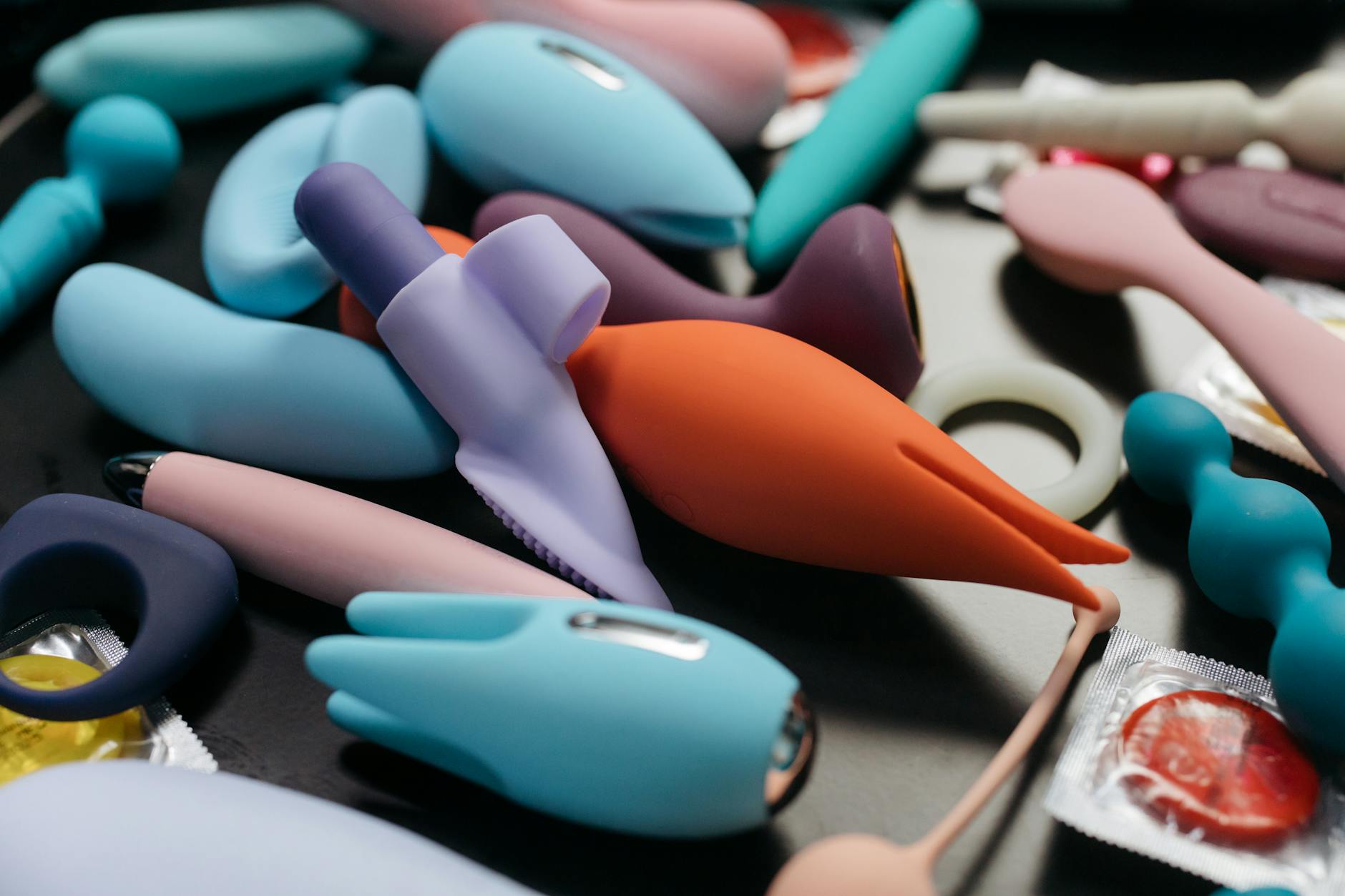
Let's talk about what actually happens to confidence
Confidence isn't one thing. It's not a fixed score that drops at menopause and stays down. Sexual confidence after 50 is a specific mix of body knowledge, permission, and the belief that you deserve pleasure. If any of those three got shaky, the whole thing wobbles.
Most people I work with at this stage didn't lose desire. They lost certainty. They're not sure what their body wants anymore. They're unsure if they should want it. And they have no idea if it's still possible to feel good the way they used to.
It is. But the path back starts alone, not with a partner.
Why solo exploration comes first
Here's what I know from two decades of working with couples: the people who rebuild sexual confidence fastest are the ones who stop waiting for a partner to make it happen. They pick a tool, set aside time, and get curious about their own body without an audience or a timeline.
This matters after 50 because your body has changed. Not broken. Changed. The sensitivity patterns are different. Arousal timing is different. What felt incredible at 35 might feel either too intense or not quite right now. You can't know that with a partner watching. You need solo space to find out.
Lemon clitoral vibrators are particularly good for this work because they're specific in what they do. They're not generic vibration. They're suction and pulse. That specificity means you can actually feel the difference between what your body likes now and what it used to like. That discovery alone rebuilds confidence.
The practical setup that changes everything
Confidence starts with removing friction from the equation. Here's what I recommend:
Set a specific time, not "whenever." This sounds rigid but it's actually freeing. You're not waiting for the perfect mood or the perfect moment. You're honoring an appointment with yourself. That shift alone signals to your brain that this matters.
Choose a space where you won't be interrupted. If you live with a partner, be explicit: "I need the bedroom from 7 to 8." If you live alone, lock the door anyway. The lock is a boundary that tells your nervous system this is safe.
Have water and a small towel nearby. This removes the awkwardness of fumbling around mid-session. You're prepared. Prepared people feel confident.
Start with your lemon vibrator on the lower intensity settings. I know there's a temptation to go straight to high. Resist it. Lower intensities let you actually feel what's happening. You're gathering information about what your body likes, not racing to an orgasm. The information is the goal.
Rebuilding the map of your body
Your clitoris hasn't changed that much. But the surrounding tissue has, and that changes the experience. The nerves are still there. The capacity for pleasure is still there. But the route there might be different now.
Start by exploring without the lemon vibrator. Spend five or ten minutes just noticing what feels good. Light touch? Firmer pressure? Direct stimulation or indirect? You're gathering data. This part can't be rushed.
When you introduce the lemon vibrator, start on the outer edges of your clitoral area, not the most sensitive spot immediately. Let the suction build gradually. The sensation should be interesting, not overwhelming. You're looking for "oh, that's nice" not "oh my god, turn it off."
Many people at this stage find that the lemon vibrator's suction feels gentler than traditional vibrators. That's often because suction works with the tissue rather than against it. It feels less like mechanical friction and more like a consistent pressure. That shift in sensation alone can rebuild confidence because you realize you're not broken. Your body just prefers a different kind of touch now.
The mental piece nobody talks about
Body confidence and mind confidence are tangled after 50. You've spent decades being told your sexuality has an expiration date. You've probably internalized that. And then your body changes in ways that seem to confirm it.
This is where solo practice matters most. When you're alone with a lemon vibrator and you have an orgasm that feels great, you get direct evidence that the story you've been told is wrong. That's not spiritual. That's neurological. Your brain updates its model of what's possible.
I tell my clients to notice what happens mentally during these sessions. Are you caught up in whether you're doing it right? That's normal but it also blocks sensation. Try redirecting: instead of "Am I doing this correctly," ask "What does this actually feel like?" The second question opens up pleasure. The first one shuts it down.
If you can't stop self-watching, that's not a failure. That's feedback. Spend time building the safety first. Maybe that means journaling about what you want, or reading erotica that makes you feel good about your own sexuality, or just sitting with your own body and noticing that you still deserve pleasure. The lemon vibrator will still be there when you're ready.
Moving from solo to partnered with new confidence
Once you've explored solo and rebuilt your own map, things shift with a partner. You're not guessing anymore. You know what feels good. You can actually ask for it. That's wildly more confident than anything you said before.
If you have a partner, the conversation doesn't have to be big. "I've been exploring some stuff on my own and found some sensations I really like. I'd like to show you." That's it. You're not asking permission. You're sharing information. The tone is the difference between "Do you think this is okay?" and "I want you to know what I've discovered."
Many couples find that reintroducing a lemon vibrator together, after one partner has already explored solo, changes the dynamic entirely. It's not about fixing the woman. It's about two people discovering something together. The confidence shift is real and it changes the whole relationship.
When confidence stalls and what to do
Sometimes you'll have sessions that feel flat. No orgasm. Or an orgasm that doesn't feel like much. This is normal and it doesn't mean anything is wrong. Your nervous system might be stressed. You might be tired. You might just be having an off day.
The confidence killer is deciding this means you're broken. You're not. You're human. Keep showing up. Solo exploration is a practice, not a performance. Some sessions are amazing. Some are just pleasant. Some feel like nothing. All of it is data.
If flatness persists across multiple sessions, check the basics. Are you actually aroused before you start? That sounds obvious but a lot of people skip foreplay when they're alone. Spend time on this. Read something that turns you on. Fantasize. Let your body warm up. Then introduce the lemon vibrator.
If sensitivity feels completely gone, water-based lubricant can help. So can a longer warmup. And sometimes it's worth talking to a doctor, especially if sensation changes feel sudden or accompanied by pain. But most of the time, the issue is pacing, not physiology.
The confidence metric that actually matters
I don't measure sexual confidence by orgasms. I measure it by this: Do you believe you deserve pleasure? Can you ask for what you want? Do you know your own body? Can you spend time with yourself without judgment?
If you're using a lemon vibrator solo after 50, you're already three for four. You're showing up. You're being curious. You're saying no to the narrative that your sexuality ends. That's the whole thing right there.
Pleasure after 50 is real, specific, and often better than before. Not because your body got magically better. But because you finally stopped waiting for permission. A lemon clitoral vibrator is just the tool. You're the confidence. Always have been.
People also ask
Is it normal to need a longer warmup after 50?
Completely normal. Hormonal shifts change blood flow and tissue response. Your clitoris still has the same nerve density, but it takes longer for arousal to build. A longer warmup isn't a sign something is wrong. It's just how bodies age. Plan for 15 to 25 minutes of gentle exploration before introducing a vibrator. This isn't lost time. It's part of the pleasure.
Can I use a lemon vibrator if I'm on hormone replacement therapy?
Yes. HRT doesn't change how suction vibrators work. That said, some people find their sensitivity shifts when they start HRT, so you might want to re-explore your preferences around intensity and pressure. Start lower than you think you need and adjust up. HRT is fantastic for many people, and so is a lemon vibrator. They work independently.
What if my partner finds out I'm using a vibrator alone?
That's actually a good thing. It means you get to have a conversation about your own sexuality with them. Most partners are relieved when a woman takes charge of her own pleasure instead of waiting for them to fix it. You can frame it exactly as it is: "I wanted to understand what I enjoy now so we can have more satisfying time together." That's not threatening. That's partnership.
How do I know if the lemon vibrator is the right tool for me?
If you're curious, it's worth a try. The suction mechanism works differently than traditional vibration, and a lot of people find it feels gentler and more specific. Your body will tell you pretty quickly whether it likes this type of stimulation. There's no wrong answer. Some people love lemon vibrators. Some prefer other tools. What matters is that you're exploring.
Should I feel guilty about preferring solo time to partnered sex right now?
No. Solo exploration actually improves partnered sex over time because you know what you want and you can communicate it. This is not selfish. This is self-knowledge. And self-knowledge makes you a better partner because you're not putting the burden of your pleasure entirely on someone else.
Will I lose sensation if I use a lemon vibrator regularly?
This is a real concern but the research is mixed, especially for suction-based vibrators. What I recommend: vary your stimulation. Solo sessions, partnered sessions, hands-only sessions. Mix in lower intensities. Take breaks. This keeps your nervous system engaged rather than habituated. And honestly, even if sensation shifts slightly over time, your brain's capacity for pleasure doesn't. You adapt and adjust, the way you do with everything else after 50.