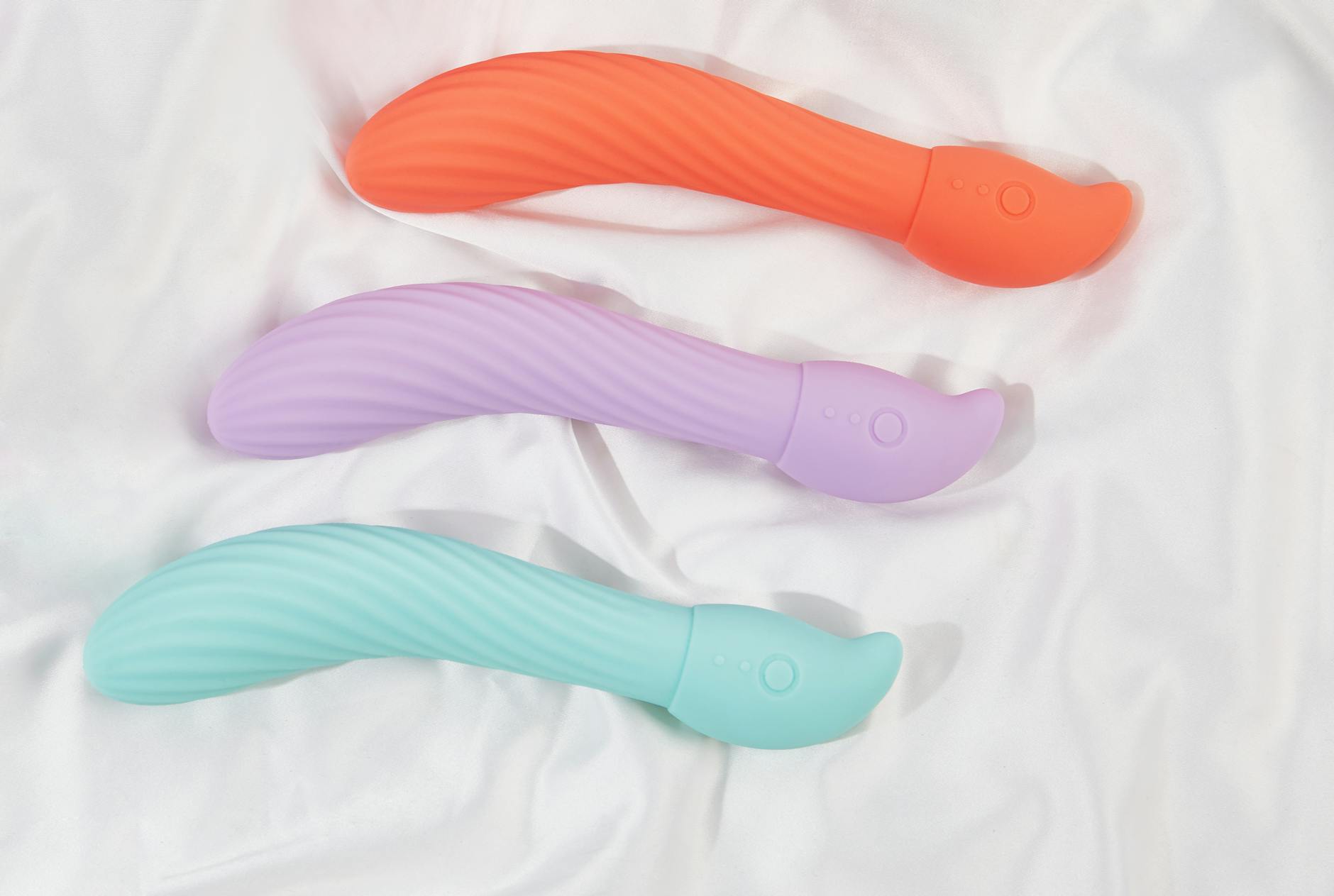
Let's talk about what trauma actually does to pleasure
Trauma doesn't erase your capacity for sensation. It changes your relationship to it. Your nervous system gets stuck in protection mode. Touch that should feel good feels dangerous. Pleasure becomes something you want but can't quite access, or something that triggers the very thing you're healing from.
If you're in recovery and considering using lemon vibrators or any clitoral toys, you're not broken for needing to think carefully about how. You're being smart. This is the guide I wish someone had given me years ago, written from a therapist's perspective after working with dozens of people rebuilding intimacy after trauma.
Why lemon vibrators work differently for trauma recovery
Most vibrators demand something from you. They vibrate at a set intensity, require pressure, ask you to chase sensation. Lemon vibrators are different. They use gentle suction instead of vibration, which means the stimulation is diffuse rather than concentrated. Your nervous system doesn't get flooded.
That matters because flooding is exactly what retraumatizes. When you're healing, your body needs to learn that sensation can be safe, controllable, and yours. A lemon sucker gives you that control in ways that traditional vibrators often don't.
Honestly though, the vibrator itself is maybe 30 percent of the equation. The other 70 percent is how you approach it, what you tell yourself before you start, and whether you have real permission to stop.
Start way smaller than you think
This is the hardest rule to follow, and the most important one. Your instinct might be to jump into solo pleasure sessions the way you used to, or the way you see other people doing it online. Don't.
Instead, spend two or three weeks just getting acquainted with the lemon vibrator outside of a pleasure context. Hold it. Look at it. Turn it on over your clothes while you're doing something completely normal, like reading or watching TV. Let your nervous system register: this object will not hurt me. This object is mine.
When you do use it for pleasure, start with the lowest setting. Lower than you think makes sense. You can always turn it up. You cannot unbuild a trauma response that just got triggered because you went too fast.
Build a container for safety
Trauma lives in the nervous system, not just in memory. Your body needs physical markers that you're safe before it can relax enough to feel pleasure. That container might include:
- A specific room or chair you've chosen, not somewhere you were hurt
- A signal you can give yourself (I like "I can stop this anytime," said out loud)
- A distraction tool nearby if you need to step out (your phone, a book, music)
- Full control over timing. Not when your partner wants it, not when you feel obligated. When you choose.
If you're working with a therapist, tell them what you're planning. Not the explicit details if that feels weird, just "I'm going to try using a toy to explore pleasure again." Good therapists support this. They'll also help you notice if something triggers a response, and why.
Grounding techniques that actually work
Your nervous system will probably do weird things the first few times. You might freeze. Dissociate. Suddenly feel unsafe even though you're literally alone in a room you chose. This is normal. It's not failure.
When that happens, pause. Try the 5-4-3-2-1 grounding technique: name five things you see, four you can touch, three you hear, two you smell, one you taste. This pulls your brain back into the present moment and out of the trauma memory.
Or try this: press your feet hard into the floor. Feel the full weight of your body on the ground. Say your name out loud. Tell yourself what day it is. These aren't spiritual tricks. They're nervous system resets.
If grounding doesn't work, stop. There's no prize for powering through.
Why lemon clitoral vibrators are particularly good for this
The design of lemon adult toys means the stimulation is gentler, less focused, and easier to adjust. You're not dealing with an intense pinpoint sensation that can feel invasive. The suction is rhythmic, which your nervous system actually finds soothing if you're recovering well. It's more like a steady hand than an electric demand.
Start with patterns 1 or 2 on any lemon vibrator. Spend entire sessions just getting used to that. There's no stage two until your body stops tensing up during stage one.
Most people in trauma recovery take longer to build pleasure capacity. That's not weakness. That's wisdom. Your body is teaching itself that it's safe again, and that takes time.
What to do if something triggers
If a sensation reminds you of the trauma, or if your body suddenly floods with fear or shame, you've gotten real information. This isn't a setback. This is your nervous system telling you something. Stop immediately. You don't need to push through, process it, or figure it out in the moment.
Step away. Drink water. Text a friend. Move your body. Then, when you're calm, maybe tell your therapist. There's usually a reason that specific sensation or moment or setting triggered you, and knowing why helps you eventually rewire it.
Some people need months of therapy before they can use any toy safely. Some need just a few sessions. Neither is wrong. The timeline is your timeline.
Partner support, if that applies
If you're in a relationship, your partner doesn't need to be present when you're using lemon sexual toys. Some people find that helpful eventually. Many don't, and that's completely fine. Your pleasure doesn't have to be shared to be real.
What your partner does need to understand is this: if you're exploring pleasure again, you need them to respect your pace without making it awkward. No pressure. No "let me know when you're ready for partnered stuff." Just quiet support.
If your partner pushes, shames, or makes your healing about their needs, that's information about the relationship too.
The math of healing
Trauma recovery isn't linear. You might have a week where everything feels possible, then hit a wall where you can't even think about pleasure without anxiety. Both are normal. Healing isn't about reaching a finish line where trauma is "gone." It's about slowly expanding your capacity to feel safe, to feel pleasure, to be yourself in your own body again.
Lemon vibrators are a tool. A really good one. But they're not the whole story. They work best alongside therapy, honest conversations with partners if you have them, and radical patience with yourself.
You're not weak for needing to be careful. You're not broken for taking longer. You're rebuilding something precious, and that deserves attention.
Frequently asked questions
Can I use a lemon vibrator if I have PTSD?
Yes, but with the grounding work first. PTSD means your nervous system is hypervigilant, so your body might interpret touch as danger even when it's safe. That's why starting small, having a pause signal ready, and working with a therapist makes such a difference. A lem vibrator's gentle suction is often easier on a hypervigilant nervous system than traditional vibration.
How long before I can actually enjoy using toys again?
This varies wildly. Some people are ready after a few months of therapy. Others take a year or more. There's no timeline. If you're measuring progress by "when can I use a toy like I used to," you might be measuring the wrong thing. Progress is "I felt safe for ten minutes" or "I didn't dissociate." Those come first.
What if using a lemon vibrator keeps triggering me?
Then you pause. Not forever, necessarily, but for now. There's no shame in that. Some people benefit from doing more trauma therapy before adding pleasure exploration back in. Your nervous system will tell you when it's ready. Listen to it.
Is it normal to feel guilty using toys while healing?
Yes. Trauma often comes with shame baked in, and pleasure can trigger that shame even when you're doing nothing wrong. That's worth exploring with a therapist, not something to fight through alone. Guilt is information, not a verdict.
Can my partner help me use a lemon vibrator safely?
Sometimes. If your partner is trauma-informed, patient, and genuinely focused on your healing rather than their own pleasure, it can help. But honestly, most people find their first solo experiences are safer and more healing. Save partnered exploration for when you're already comfortable on your own.
What if I have numbness instead of pain or anxiety?
Dissociation and numbness are also trauma responses. You might use a lemon clitoral vibrator and feel nothing, even though it should feel good. That's not a sign you're broken. It's a sign your nervous system is still protecting you. Keep the grounding work going. Sensation often returns slowly.
You're allowed to take your time
Trauma steals a lot. Don't let it steal your pace too. Using lemon vibrators again, or for the first time, is an act of reclamation. It doesn't have to look like anyone else's journey. It just has to feel safe to you.
If you're struggling with this alone, reach out. Whether that's a therapist, a trusted friend, or <a href="/contact">Hello Nancy's support team</a>, you don't have to figure this out in isolation. Healing is possible. Your capacity for pleasure is still there, even if it feels far away right now.