How to Use Lemon Vibrators When You Feel Disconnected From Pleasure
Let's be real. Sometimes pleasure doesn't feel like yours anymore.
You go through the motions, your body responds on paper, but there's a distance. A pane of glass between wanting something and actually feeling it. Some people describe it as numbness. Others call it flatness, or like they're watching themselves from outside. All of those descriptions point to the same thing: pleasure dissociation.
This is not the same as low libido. This is not the same as depression, though it often travels with it. Pleasure dissociation is a specific disconnection from sensation—a neurological gap between stimulation and the reward response in your brain. And here's what matters: it's treatable.
What pleasure dissociation actually is
Your pleasure system has two parts. The first is sensation: your body registering touch, pressure, vibration. The second is the emotional response to that sensation: the cascade of dopamine and oxytocin that makes touch feel good. When those two systems aren't talking to each other, you get dissociation.
You can feel the vibration. Your clitoris registers the stimulation. But the "this feels amazing" part doesn't fire. It's like watching someone else's excitement rather than experiencing your own.
This happens for a lot of reasons. Trauma and anxiety are obvious ones, but so are burnout, chronic stress, antidepressants, hormonal shifts, and even just the accumulated weight of life moving too fast. Your nervous system gets stuck in a protection mode where pleasure feels like a luxury it can't afford.
Why lemon vibrators work differently for dissociation
This matters because not all stimulation feels the same when you're dissociated.
Traditional vibrators deliver consistent, rhythmic stimulation. They're predictable. For someone whose nervous system is already offline, predictability can actually feel boring—it doesn't recruit enough of your attention to break through the glass.
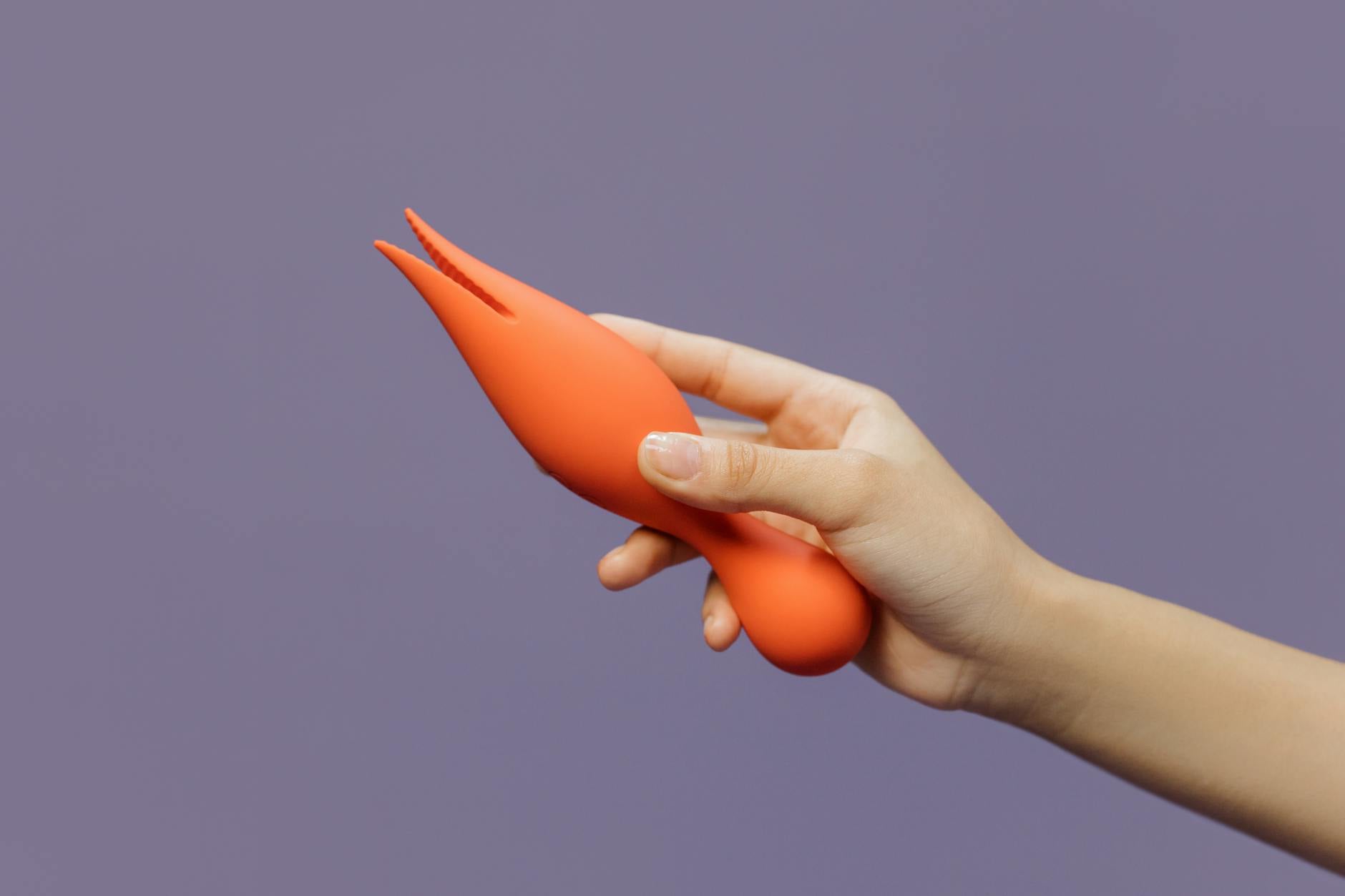
Lemon clitoral vibrators use a suction-based pattern instead. The sensation is dynamic: it builds, holds, releases, builds again. That variability demands more of your nervous system's attention. You can't zone out into the background while using a lemon sucker because the stimulation pattern keeps shifting.
For dissociation specifically, that unpredictability can be the difference between feeling nothing and feeling something real.
The foundation: nervous system regulation comes first
Here's what I tell clients: if your nervous system is in constant fight-or-flight, your pleasure system is offline. You can't force reconnection. You have to invite regulation first.
Two weeks before you even pick up a clitoral vibrator, start here:
Sleep and movement matter more than you think. Dissociation deepens with sleep debt. Aim for consistent bedtime and wake time, even on weekends. Movement that feels good to you—walking, dancing, stretching, not punishing exercise—helps your nervous system understand that safety and pleasure are possible.
Lower your baseline stress. That could mean turning off notifications after 8 p.m., having one less meeting if you can, or sitting outside for ten minutes without your phone. These sound small because they are. Pleasure dissociation thrives in chaos.
Name what's happening. This alone rewires something. Instead of "I'm broken," try "My nervous system is protecting me right now, and I'm going to help it feel safe." That shift from broken to protected is the beginning of reconnection.
How to use lemon vibrators when you're starting from disconnection
When you're ready to try, follow this progression. This is not for people with healthy sensation—this is specifically for dissociation.
Session one: sensation mapping without orgasm as the goal. This is crucial. Orgasm pressure makes dissociation worse because you're chasing an outcome your brain can't deliver yet. Instead, sit with the lemon vibrator on the lowest pattern. Don't aim anywhere. Just explore your own geography. Does it feel different on the outer vulva versus the clitoris? Inner thigh? The goal is curiosity, not pleasure. Many people find that curiosity itself is the first crack in the glass.
Session two and three: pattern variation. Now try different patterns on the Lemon. Spend two minutes on pattern one, then switch to pattern two. Your brain is learning that stimulation can change. Variability is part of the cure.
Session four and beyond: adding breath and presence. This is where reconnection actually happens. Before you turn the vibrator on, take three long breaths. When you feel the suction start, synchronize your breathing with the pattern. Breathe in during the buildup, exhale during the hold. Your breath tethers you to your body. It's almost impossible to dissociate while you're actively breathing.
What pleasure dissociation needs that vibrators alone can't give
Here's the honest part: a vibrator, even a lemon clitoral vibrator, is a tool. It's not the whole cure.
If your dissociation is rooted in trauma, you likely need someone trained in somatic therapy or trauma-informed sex coaching. If it's rooted in anxiety, cognitive behavioral therapy moves the needle. If it's medication-related, that's a conversation with your prescriber about timing, dosing, or switching.
What a vibrator does do is give your nervous system permission to practice pleasure again in a low-stakes way. It's like physical therapy for your pleasure system.
When to bring a partner in
If you have one, the instinct is often to involve them immediately. Don't. When you're dissociated, having someone watching or waiting for your response adds performance pressure. Performance pressure deepens dissociation. Full circle.
Spend two to three weeks reconnecting to your own sensation solo. Then, if you want to, tell your partner something like: "I'm working on reconnecting to myself. That might take a few weeks, and I'd love your patience with that." No performance required. No timeline.
Many people find that once they rebuild the pathway to pleasure on their own, sharing it with a partner feels different. Less like proving something. More like inviting someone into something real.
The timeline is longer than you think (and that's okay)
Dissociation didn't happen overnight. Reconnection won't either.
Some people report feeling the glass crack in two weeks. Others take two months. Neither one means anything is wrong with you. Your nervous system is learning that pleasure is safe again. That's not fast. It's thorough.
During that time, you might feel frustrated. You might have days where the vibrator feels pointless. That's normal. Stick with the pattern. The reconnection isn't linear. It's one session of genuine sensation, then a session where you feel nothing, then three sessions where you feel something building. Trust the graph's overall direction, not its day-to-day wobble.
The role of curiosity over expectation
One small but critical shift: approach this from curiosity, not expectation.
Expectation says "I should feel this by now." Curiosity says "I wonder what I'll notice today." That difference might sound subtle, but it's the difference between your nervous system staying locked and starting to unfold.
When you pick up a lemon vibrator in a state of curiosity, you're not performing for anyone. Not for your partner, not for yourself, not for some ideal version of your sexuality. You're just showing up to see what's there.
That might be the most powerful thing a vibrator can offer someone in dissociation. Not a guarantee of fireworks. A permission to look.
FAQ: Reconnecting to pleasure after dissociation
Can dissociation from pleasure be permanent?
No. Your nervous system is designed to reconnect. It might take time, professional support, or both, but the capacity for pleasure doesn't disappear. It goes dormant. It can wake back up.
Does using lemon vibrators make dissociation worse if I'm not ready?
It can, yes. If you try a vibrator while your nervous system is in active fight-or-flight (during high stress, unprocessed trauma, or unmanaged anxiety), it might feel more empty than before. That's not failure. That's your nervous system telling you it needs regulation first. Go back to the foundational stuff for a few more weeks, then try again.
How do I know if my dissociation is normal vs. something that needs a therapist?
If it's been longer than two weeks and every time you try to engage with pleasure it feels like you're behind glass, talk to someone. That's the marker. Two weeks of disconnection after stress is normal. Two months is a conversation to have with a professional.
Can antidepressants cause pleasure dissociation that lasts after you stop them?
Yes. Some people experience sexual side effects even after discontinuing. This is worth discussing with a prescriber. Sometimes a dosage adjustment, timing change, or switch to a different medication helps. A vibrator designed for variable sensation, like a lemon clitoral vibrator, can sometimes help bridge the gap while your body recalibrates, but it's not a replacement for medical conversation.
Is it normal to feel guilty about using a vibrator to reconnect to pleasure?
Very normal, especially for people raised with messaging that pleasure needs a purpose or a partner. Guilt is just internalized restriction speaking. Your pleasure matters on its own. Full stop. Using a vibrator to reconnect to your own sensation is not selfish. It's maintenance.
Should I tell my partner I'm using a vibrator to work on dissociation?
That depends on your partnership and what you need. Some people feel better with transparency. Others need privacy to reconnect without performance energy. Both are valid. If you do tell them, frame it as "I'm working on something for myself" rather than "something is wrong with our sex life." Dissociation is about your nervous system, not about your relationship.
The bottom line
Disconnection from pleasure is not a character flaw. It's not permanent. It's your nervous system protecting you, and like all protection systems, it can be gently convinced to stand down.
A lemon vibrator can help with that. So can sleep. So can a good therapist. So can breathing into your body and giving yourself permission to feel things slowly.
You don't need to earn your pleasure back. It's already yours. You're just letting yourself remember how it feels.
If you're struggling with persistent dissociation or reconnecting to sensation on your own, reach out. We're here to help you figure out what you need.