
Let's name what's happening
Your medication is working. Your depression is lighter, your anxiety is quieter, your blood pressure is stable. And somewhere in that chemical rebalancing, pleasure went quiet too. You still want to feel good. Your body just stopped cooperating.
This isn't a personal failing. It's a dose-response curve that nobody warned you about.
Why medications flatten sensation
SSRIs (selective serotonin reuptake inhibitors) are the usual culprit, but antipsychotics, some blood pressure medications, and even certain antihistamines can all reduce sexual sensation. Here's the mechanism. These drugs work by altering neurotransmitter availability in your brain and nervous system. Serotonin, dopamine, and norepinephrine all play roles in arousal, genital sensation, and orgasm intensity. When you shift those levels to treat a mental health condition, pleasure often becomes collateral.
The irony hits hard. A medication that saves your life can make you feel numb below the neck. That's not something you're doing wrong. That's chemistry.
But here's the other part. Numbness is not destiny. It's a puzzle that gets easier to solve once you understand what's actually happening.
How clitoral vibrators change the equation
Lemon clitoral vibrators like the Lem work because they bypass the flattened sensitivity pathway. Instead of relying on your nervous system to amplify subtle sensation, a clitoral vibrator creates enough external stimulation that your body has something concrete to register.
Think of it like turning up the volume when someone's speech sounds muffled. The words aren't any louder in reality, but now you can hear them.
Air-suction vibrators specifically are effective here because they stimulate a wider nerve cluster at once. Rather than the focused friction of a traditional vibrator, the suction pattern creates a broader field of pressure and release. For numb bodies, that broader stimulus is easier to feel. You're not hunting for a specific sensation. You're meeting your body halfway.
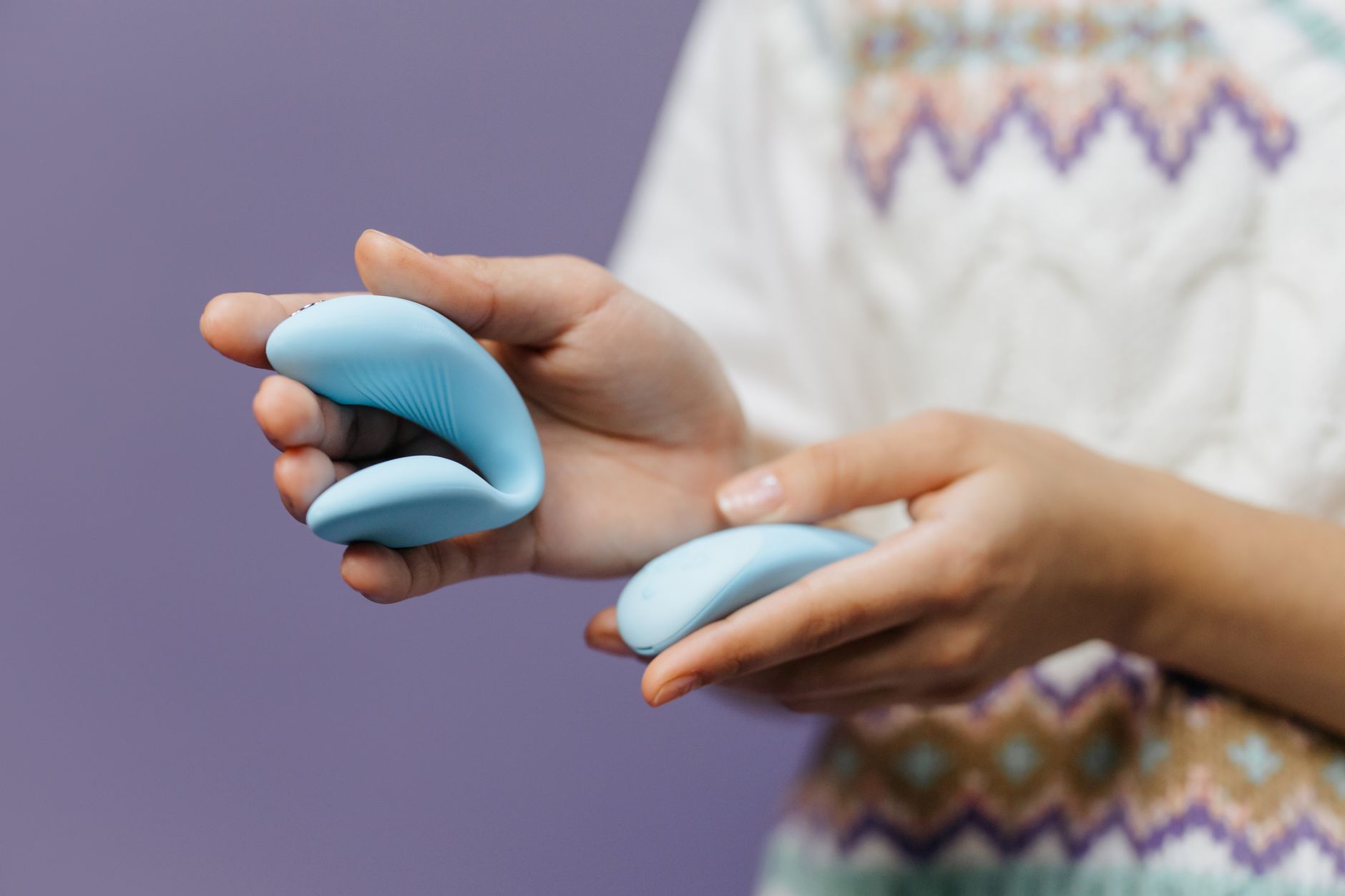
Photo by cottonbro studio on Pexels
The practical setup that matters
Start lower than you'd normally expect. If numbness is your issue, you'll need intensity, but you want to find your threshold first rather than shocking your body into overstimulation. Begin at pattern 1 or 2 on a lemon clitoral vibrator and sit with it for a full minute before adjusting upward.
Budget twice the arousal time you'd normally use. Numbness means your body needs runway. Fifteen to twenty minutes of warm-up before introducing a vibrator is standard when medication is involved. This isn't extended foreplay for pleasure's sake. It's giving your nervous system time to wake up.
Position matters more than you'd think. When sensation is muted, directness counts. Full-contact positioning on the clitoris (not hovering nearby) gives you the best chance of registering what's happening. The suction pattern of a lemon vibrator means you don't need to hold it at an angle. Dead-center pressure is the goal.
When switching medications might be the real answer
Not every medication that causes numbness is worth keeping at the same dose. If your sexual function mattered before the medication and matters now, that's a legitimate conversation with your prescriber. Some options exist.
You can ask about timing adjustments (taking the dose later in the day so nighttime sensitivity improves). You can ask about dosage reduction if your mental health is stable at a lower level. You can ask about switching to a different class of medication entirely. Some people tolerate sertraline better than paroxetine. Some find that buspirone or bupropion has fewer sexual side effects.
None of these conversations should feel like you're complaining about a side effect you should just accept. Your sexual health is health. Full stop.
That said, sometimes the medication you're on is the only one that works for your mental illness. In those cases, you're not choosing between pleasure and survival. You're working within the reality of what keeps you alive and then using tools like lemon vibrators to reclaim sensation within those constraints.
The emotional reset that has to happen first
Here's the part that my clients rarely expect. Numbness often creates a feedback loop. You try to feel something, can't, and then avoid trying again because avoidance hurts less than repeated disappointment. That protective instinct is smart. But it also means you've internalized the belief that your body is broken.
It's not broken. It's medicated. That's different.
Reconnecting with sensation means separating yourself from the shame of not being able to feel on your previous timeline. Your body isn't failing you. Your neurochemistry has shifted. A clitoral vibrator isn't a hack or a workaround. It's a tool that meets your body where it actually is right now, not where you wish it was.
That cognitive shift matters as much as the vibrator itself. You're not trying to force your body back to baseline. You're exploring what sensation is available at your current medication level and working from there.
Session structure that actually builds sensation back
Day one: Just introduction. Hold the vibrator, turn it on at the lowest setting, spend two minutes on direct clitoral contact. Notice what you feel. Don't chase an outcome.
Day three through five: Ten-minute sessions at patterns 1 and 2. No pressure to feel more. The goal is data, not destination.
Week two: Expand to fifteen-minute sessions. Introduce pattern 3. Pay attention to what intensity actually registers versus what you think should register.
Week three onward: Build slowly to your comfortable intensity range. This isn't a linear climb. Some sessions will feel more responsive than others. That variability is normal medication-adjusted sexuality, not backsliding.
Many people find that over four to six weeks of consistent, low-pressure exploration, sensation gradually returns. Not to baseline, necessarily. But to a new normal that's stable and accessible. Your body remembers how to feel pleasure. It just needs permission to relearn the pathway at a different intensity level.
The conversation with your partner, if you have one
If you're partnered, this is worth discussing before you grab a clitoral vibrator. Not as an invitation for them to fix you or to prove something about your relationship. But as context. "I'm experiencing numbness as a side effect of my medication. I'm going to explore some things on my own to understand what's happening. This isn't about us."
For some couples, introducing a lemon vibrator together becomes part of reconnection. For others, this is solo exploratory work. Both are valid. The key is that your partner understands this is about medication response, not relationship dissatisfaction.
If your partner is interested in being present during this, the typical pattern is them watching you use a clitoral vibrator on yourself. This does two things. It takes pressure off you to perform. And it lets them understand your actual sensitivity level right now, which often improves how they approach you outside these sessions.
When to loop in your prescriber
If numbness is making your life smaller (you're avoiding intimacy, withdrawing from partnership, losing motivation for sexual activity altogether), tell your doctor. These are not minor side effects. They're quality-of-life issues.
Bring specific information. "I experience reduced sensation during sexual activity that started two months after increasing my dose." Vague complaints get vague responses. Specificity gets action.
Also loop them in if using a lemon vibrator feels physically uncomfortable rather than just numb. Pain, burning, or unusual sensations can indicate that something else is going on medically and deserves investigation.
The realistic timeline
You won't feel like yourself again in two weeks. You might feel something shift in four to six weeks. Real restoration takes two to three months of consistent gentle exploration. That's frustrating when you want your body back immediately. But that timeframe is actually how neurological adaptation works. Your nervous system doesn't flip switches. It recalibrates gradually.
Patience here is not surrender. It's strategy.
Frequently Asked Questions
Can I use lemon vibrators while on SSRIs without worsening my medication side effects?
Yes. A clitoral vibrator doesn't interact with your medication. It's an external tool that creates stimulus your nervous system can register despite flattened sensation. Using a vibrator won't make your numbness worse any more than using a hearing aid makes deafness worse. It's accommodation, not escalation.
How long should I wait after starting a new medication before assuming numbness is permanent?
Wait at least six weeks before concluding that numbness is stable. Some medications take time for side effects to fully develop, and some people adjust after an initial flattening. Six weeks gives you enough data to have a real conversation with your prescriber about whether this dose and medication are sustainable for you.
Will sensation return if I switch medications?
Often, yes, but not always immediately. If you switch to a medication with fewer sexual side effects, you might notice changes within days to weeks. But if your body has been numbed for months, it can take a few weeks of being off the original medication for full sensation to return. Your nervous system recalibrates on its own timeline.
Is using a vibrator like the Lem a sign that something is wrong with me?
No. Using any tool to help you access pleasure when medication has interfered with sensation is exactly as medical as taking the medication in the first place. You're not broken. You're adapting.
Should I tell my partner I'm using a clitoral vibrator to cope with medication numbness?
That depends on the relationship and your comfort level. If you're partnered and sharing a bed, transparency usually works better than secrecy. You can frame it as neutral: "My medication is causing numbness, so I'm using a vibrator to understand what my body can feel right now." Most partners respond better to that honesty than to discovering it yourself and wondering if you're hiding something.
Can I still have partnered sex while managing medication numbness?
Completely. Many people combine solo vibrator sessions with partnered intimacy. The vibrator helps you understand your body's response when medication has altered it. That information then informs partnered sex. You know what intensity and duration actually work for you now. You can communicate that clearly.
What comes next
Medication saved your mental health. Your body responding differently to stimulation is a known, manageable side effect, not a tragedy. A lemon clitoral vibrator like the Lem is one tool for reconnecting with sensation. It won't erase the numbness, but it often shifts you from "I can't feel anything" to "I can feel this specific thing at this specific intensity."
That's not settling. That's pragmatism. And from pragmatism, real pleasure often returns.