How birth control rewires your pleasure response
Here's what nobody tells you about hormonal birth control: it doesn't just prevent pregnancy. It fundamentally changes how your nervous system responds to touch. And that's not a design flaw. It's the mechanism.
When you start hormonal contraception, you're lowering your baseline estrogen and suppressing ovulation. That affects your clitoris, your vaginal tissue, your brain's arousal response, and the speed at which your nervous system fires during stimulation. Some people report that pleasure feels muted. Others say it takes longer to build. A few describe it as sharper but more distant, like watching yourself from outside the experience.
None of these versions are wrong. They're all neurochemically accurate.
The specific changes that happen
Three main things shift:
Blood flow changes. Estrogen directly impacts vascular function. Lower estrogen means less blood rushing to the clitoris during arousal. That affects engorgemement, sensitivity, and how quickly you can reach orgasm. It doesn't mean you can't come. It means the pathway got longer.
Lubrication timing. Your cervical mucus changes on hormonal birth control, and so does your natural lubrication response. You might produce less, or it might take longer to produce. Again, not broken. Just different.
Dopamine baseline. Hormonal contraception affects dopamine regulation in the brain, which is central to desire and reward. Some people find their sexual interest drops noticeably. Others don't feel it at all. The variability is huge, and genetics, stress, and relationship context all play a role.
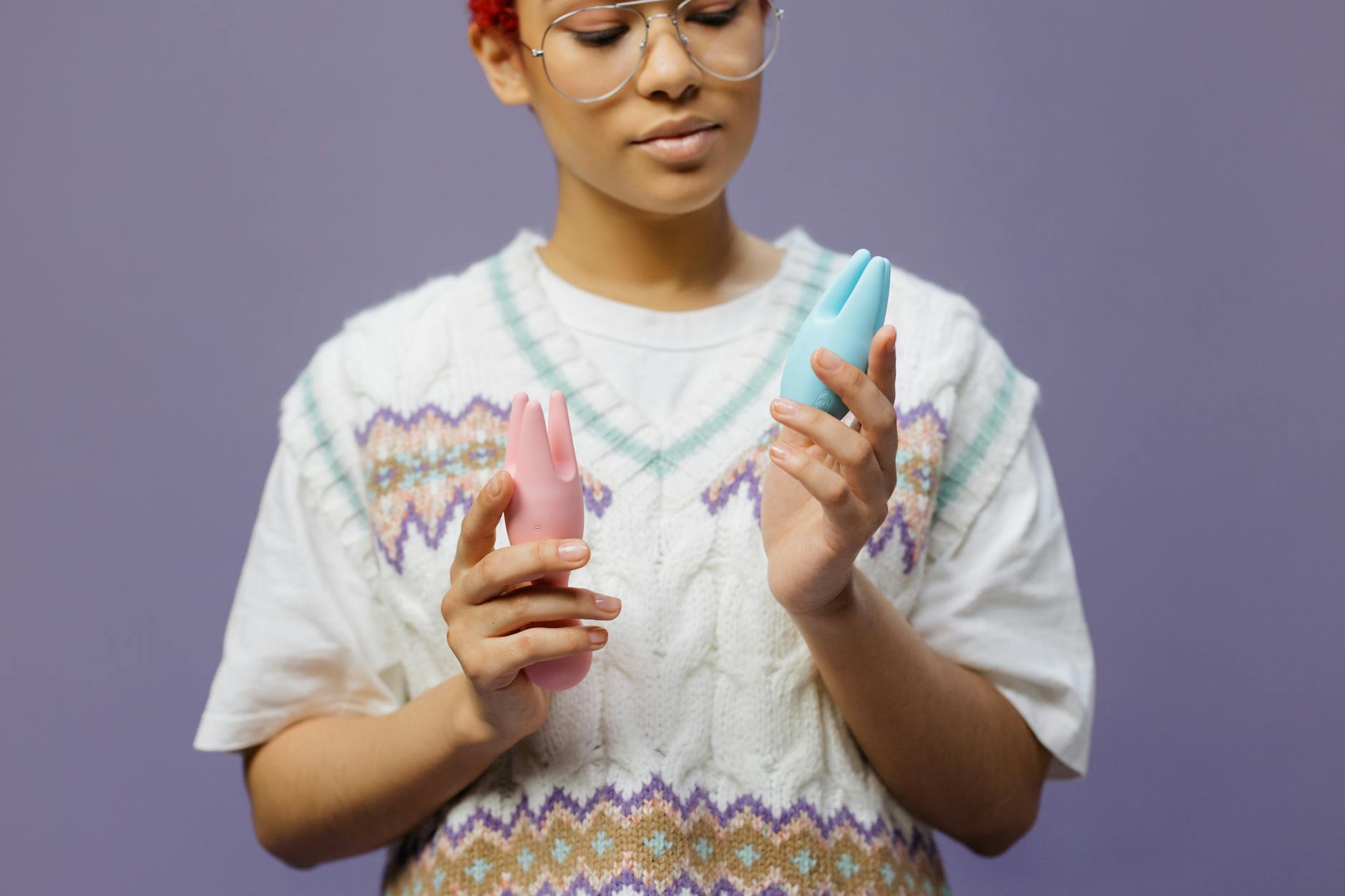
Photo by cottonbro studio on Pexels
Why lemon clitoral vibrators work better with these changes
A suction-based vibrator like the Lem works differently than traditional vibrators. Instead of friction, it uses gentle pulses of suction and air stimulation. That matters when your sensitivity has shifted.
Here's why: when estrogen-dependent blood flow is lower, direct pressure can feel either numb or overstimulated, with nothing in between. You're looking for a tool that bypasses the friction problem and directly engages the nerve endings. Air-pulse technology does that. The Lem's suction pattern activates sensory receptors without requiring your tissue to be maximally engorged or your lubrication to be abundant.
It's not a workaround. It's actually a better match for how your body is working right now.
How to recalibrate your expectations
The biggest mistake I see is people assuming they've lost sensation permanently, when actually they've just switched to a different type of sensation. Frustration happens when you're chasing the "before" version.
Instead, treat this like learning your body again. Here's the practical reset:
Start with patterns 1 and 2. Don't jump to intensity. Your Lem vibrator has seven intensity levels. Most people on hormonal birth control find that levels 3-5 are their sweet spot, where intensity is enough to register but not so much that it numbs out. Start lower and work up over multiple sessions. You'll learn what your current baseline is.
Extend your warm-up time by 10 minutes. If you used to need five minutes of foreplay or solo touch, budget fifteen now. This isn't punishment. Blood flow and arousal build slower on hormonal contraception, and that's metabolically real, not psychological.
Layer lubrication intentionally. You don't need buckets of it. But a water-based lubricant (your Lem works with any water-based formula) removes friction questions and lets you focus on sensation instead of mechanical problems.
Track patterns across a cycle. Even on hormonal birth control, your body has a rhythm. Some days sensation will feel more accessible. Some days it won't. This isn't inconsistency. It's your endocrine system still doing its job at a lower level. Journal what pattern works when, and you'll see the rhythm.
When to consider switching or adjusting
If your pleasure shift is severe and unwelcome, you don't have to live with it. A few conversations worth having:
With your prescriber: not all hormonal birth control affects sensation equally. The pill, the patch, the ring, the implant, and the shot all have different dosing profiles. Some people find switching formulations helps significantly. Low-dose options exist. Progesterone-only methods might feel different than combined hormonal methods.
With your partner (if applicable): if sensation changes are affecting your experience together, that's a separate conversation from what's happening in your body. Many couples find that explicitly naming the shift, removing pressure, and exploring new techniques actually deepens intimacy. Connection and pleasure aren't the same thing, and sometimes the best outcome is rediscovering both.
With yourself: if you're someone who experiences low sexual desire as a side effect, this is worth taking seriously. It's not a character flaw. Low libido on hormonal contraception is documented and real. There's no shame in choosing a different method, trying a different formulation, or deciding that the trade-off isn't worth it for you.
The long game: pleasure adaptation
Here's what I've seen across years of working with people navigating this: three to six months in, most people stop calling it a change and start calling it their baseline. Your brain adapts. Your expectations reset. And often, the lemon clitoral vibrator technology becomes part of how you've learned to access pleasure more reliably.
Some people find that having a tool designed specifically for air-pulse stimulation actually improves their experience even after they eventually switch or stop hormonal contraception. You've learned something about your body.
The goal isn't to feel exactly like you did before. The goal is to feel good now, in your current body, with your current chemistry. And that's completely achievable.
FAQ: Hormonal birth control and sensation
Does birth control permanently change your ability to orgasm?
No. Sensation and orgasm capacity are different things. Birth control can change how quickly you get there or which type of stimulation works best. It can also lower desire. But the physiological ability to orgasm remains intact. What changes is the pathway, not the destination.
Can I use a regular vibrator instead of a suction-based one?
Yes, but you might need to experiment more. Traditional vibrators rely on frequency and intensity to trigger nerve endings. When blood flow is reduced, high frequency sometimes feels numb. Suction vibrators like the Lem engage sensory receptors differently, which is why many people find them easier to use during hormonal shifts. Try both if you can. Your body will tell you which works.
How long until sensation feels normal again?
That depends on your body and the specific contraception. For some people, three weeks in, sensation feels the same. For others, it takes months. If you're considering switching methods, give yourself at least three full cycles on the current method before deciding. Adaptation happens slowly.
Does lube help if birth control affects lubrication?
Yes, and it's not a band-aid. Water-based lube removes friction variables so you can focus on what's actually happening with sensation. It also prevents the micro-abrasions that can happen when tissue is drier, which protects your long-term comfort. Use it liberally and reapply as needed.
Should I tell my partner about sensation changes?
If you have a partner and you're intimate together, yes. Not as a problem to solve, but as information they should have. Many partners interpret a change in responsiveness as a change in desire for them. It's almost never that. Clear communication prevents a lot of unnecessary distance. You might find that your partner actually has ideas or approaches that work better with your current body.
What if sensation feels better on birth control than before?
Then you're not in the majority, and that's fine. Some people find that lower hormonal levels actually reduce some types of pain or pressure sensation, making pleasure more accessible. If you're experiencing this, you don't need to change anything. You're already dialed in.
The bottom line
Hormonal birth control changes your pleasure landscape. It doesn't erase it. Your job is to stop fighting the change and start exploring what works in your new baseline. A lemon clitoral vibrator is a tool designed specifically for people navigating sensation shifts. It works with your body instead of against it.
If you're feeling frustrated or disconnected from pleasure right now, that's normal. And it's also fixable. Start with lower patterns, build in more warm-up time, and give yourself permission to relearn your body. Pleasure isn't static. It adapts. So can you.
If you're struggling to reconnect with sensation or finding that shifts are affecting your relationship, we're here to help. Reach out at /contact to discuss what's working and what isn't.