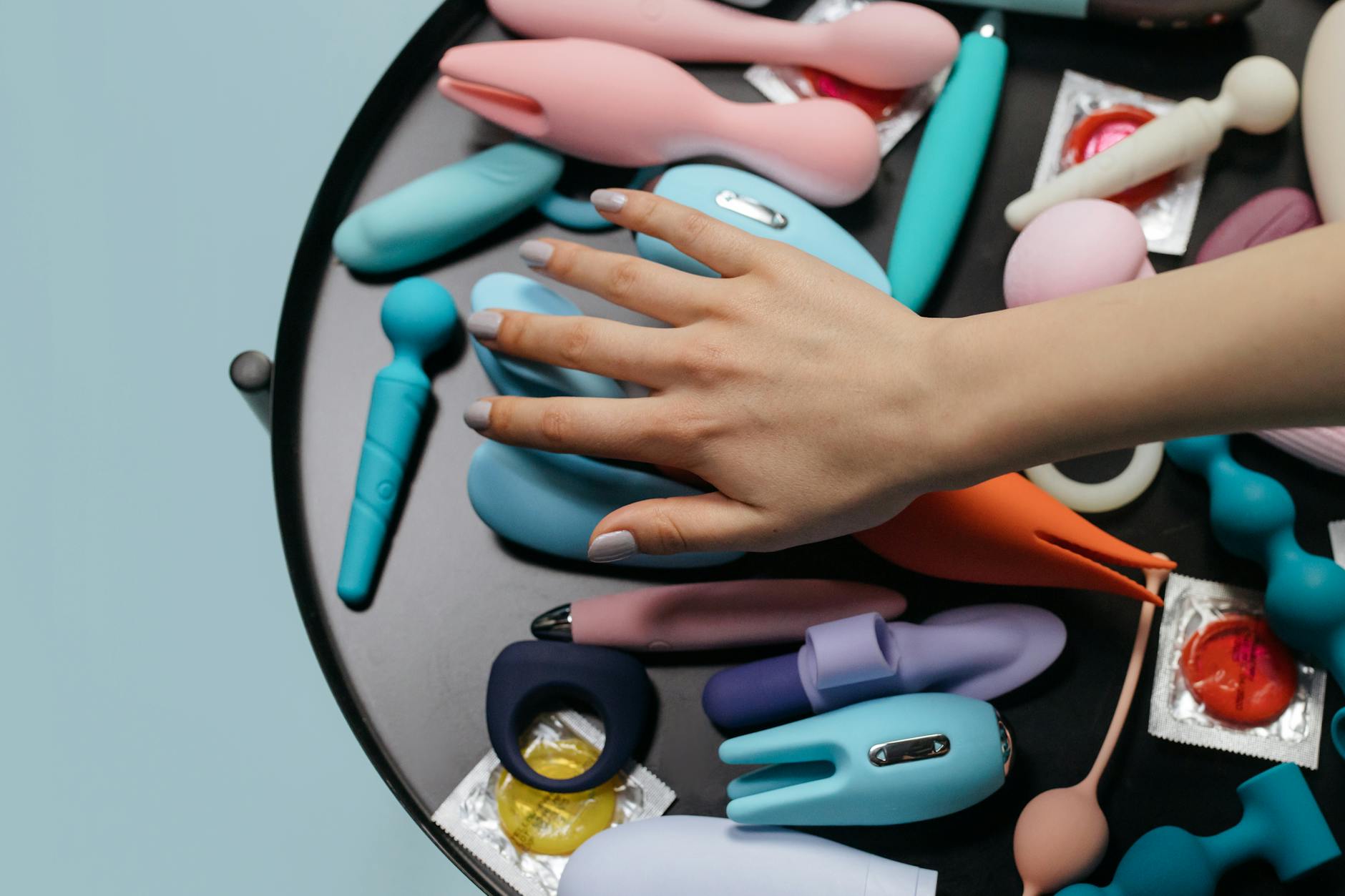
Let's talk about the awkward part first
You spent years, maybe decades, having sex as a duet. Your body learned to respond to someone else's timing, rhythm, and preferences. Now you're alone, and your hand on your own body feels like a stranger's touch. That's not broken. That's normal.
What's also normal? Not knowing where to start. Most people who exit long partnerships haven't spent quality time solo since before they partnered. The scripts they internalized were all paired. A lemon clitoral vibrator changes that equation because it lets you bypass the guilt, the muscle memory, and the weird cognitive dissonance of pleasuring yourself after years of pleasure being a shared act.
Why this moment matters (and why it's harder than you think)
When you're in a partnership, even a difficult one, your sexuality exists in conversation with someone else. You might suppress desire, shape it to fit their preferences, or build a rhythm that makes both of you comfortable. That's the work of partnership. But when you're alone, there's no one to answer to. That freedom can feel like a void.
Research on post-relationship sexuality shows something interesting: people who took time to reconnect with their own pleasure before entering a new relationship reported higher satisfaction, better communication about their needs, and less resentment in future partnerships. Solo exploration isn't selfish. It's actually the foundation for healthier shared sex later.
Honestly though, that's the head argument. The heart argument is simpler. Your pleasure matters. Your body is yours now. You get to find out what you actually want, separated from compromise or performance.
The mental block (and how to move past it)
Most of my clients in this position report the same three mental loops: "This feels selfish," "I'm touching myself like a teenager," or "I don't even know what I like anymore." All three are real. All three dissolve with some repetition and permission.
Here's the reframe I offer: using a lemon vibrator alone is not a substitute for partnership sex. It's research. You're gathering data about your own body so that when you eventually partner again, you have something to contribute to the conversation beyond "I don't know, what do you want to do?"
That mental shift changes everything. You're not replacing a partner. You're learning a language you forgot you spoke.
Starting without pressure (the actual protocol)
Don't start with the goal of an orgasm. I know that sounds counterintuitive, but orgasm as the finish line is exactly the framework that kept you from knowing your own pleasure in the partnership. This time, the goal is sensation. Novelty. Familiarity.
Block out 20 minutes when you won't be interrupted. Not an hour. Twenty minutes is enough to feel something, not so long that you psych yourself out. Light a candle if that helps. Put your phone face-down (the notifications will kill the vibe faster than anything else).
Start with your hands. Touch your neck, your collarbone, your inner arms. Notice what you've forgotten. Most people who exit partnerships are shocked at how much of their own skin they haven't intentionally felt in years. This matters. This is the reset.
After five or ten minutes, introduce the lemon clitoral vibrator. Start at the lowest pattern. This isn't about intensity. It's about learning what your specific nerve endings respond to. Lemon vibrators work through suction, which is wildly different from the direct pressure of a hand or even a traditional vibrator. The sensation is rounded, layered, less likely to numb you out.
What you might feel (and what it means)
Three things happen in those first few sessions, and they're all normal.
Emotional release. Your body might cry. It might laugh. It might feel tense, then suddenly vulnerable. You're reuniting with a part of yourself that's been on hold. Emotions come with that territory.
Difficulty focusing. Your brain might wander to the dishes, to your ex, to whether you're doing it right. That's called intrusive thought, and it gets quieter with practice. When it happens, gently redirect. Notice the sensation of the lemon vibrator. Notice your breathing.
Slower arousal than you'd like. After years in a partnership where sex was initiated by someone else or was part of a familiar choreography, your arousal apparatus might take longer to warm up. That's not a problem. Budget for it. Use the time to explore, not to achieve.
Building a sustainable practice (not a performance)
This is where the transition becomes real. Instead of sex being something that happens to you or with someone else, it becomes something you do, solo, regularly. That shift is profound.
I recommend exploring with your lemon clitoral vibrator three times a week, at least in the first month. Not because you have to, but because consistency is what allows your nervous system to relax into the experience. Your body learns: this is safe, this is for me, this is reliable.
As you settle in, you'll notice preferences emerge. Maybe you like the lemon vibrator on its lowest setting, for a long time. Maybe you like to combine it with penetration. Maybe you like to use it with a partner eventually, which is a whole different discovery. The point is, you won't know until you ask.
Navigating the guilt (when it shows up)
Almost everyone rebuilding solo pleasure after a partnership hits guilt at some point. It shows up as: "I shouldn't be doing this," "This is weird," or "I'm wasting time." Sometimes it's linked to religious upbringing. Sometimes it's linked to the partnership itself: shame transferred inward.
Here's what I tell my clients: solo pleasure is not infidelity. It's not betrayal of an ex. It's not immature or wrong. It's the bare minimum act of self-knowledge that every person deserves.
If the guilt is really sticky, write it down. Get specific. "I feel guilty because..." and finish the sentence. Often you'll find the guilt isn't actually about solo pleasure. It's about freedom feeling unfamiliar. Or about anger at your ex that's hiding behind shame. Name it, feel it, move through it.
When to involve a partner again (and what you've learned)
Eventually, if you want partnership again, you'll be in a position to show someone what you've discovered about yourself. That's powerful. You're not guessing. You're not defaulting to what worked before. You're bringing actual knowledge.
Many of my clients report that reintroducing their lemon vibrator with a new partner is a turning point. Because you've already learned it independently, using it together isn't about insecurity or asking. It's about expansion. "I like this. I want to show you." That changes the whole dynamic.
People also ask
How long does it usually take to feel comfortable exploring solo pleasure after a partnership?
Three to four weeks of regular practice is when most people report that the weirdness starts to fade and the pleasure starts to deepen. Your nervous system needs repetition to believe that this is safe and okay. That doesn't mean you'll feel incredible after three weeks. It means the resistance will soften enough that genuine exploration becomes possible.
Is it normal to not orgasm the first few times with a lemon vibrator?
Completely normal. You're relearning your own body in a new context with a new sensation. Orgasm isn't the goal right now. Sensation is. Comfort is. The orgasms come naturally once the mental and emotional resistance drops. Most people report that their first solo orgasm with a lemon clitoral vibrator is significantly different from what they remember. That's because you're not performing it for anyone.
Can I use a lemon vibrator with a partner after exploring solo?
Absolutely. In fact, many people find that solo exploration makes partnered sex better because you're not relying on your partner to figure out what you like. You already know. You can actually guide the experience instead of accommodating it. If you're interested in that transition, how to use lemon vibrators when your partner wants to watch covers the communication piece thoroughly.
What if I feel vulnerable or exposed during solo exploration?
That's actually the point where growth happens. You're doing something intimate alone, which means you can't hide or perform. That vulnerability is the entry point to genuine pleasure. If it feels too intense, slow down. Set a timer for ten minutes instead of twenty. Use the lemon vibrator for three minutes, then pause. There's no rush. Your body will open up when it's ready.
Does using a lemon vibrator make it harder to orgasm with a partner later?
No. The opposite, actually. Because suction stimulation from a lemon clitoral vibrator works through a different mechanism than hands or traditional vibrators, your body doesn't develop the same kind of specific adaptation. You're expanding your nerve sensitivity, not narrowing it. Many people find they're more responsive to a variety of touch after exploring solo with a quality vibrator.
Is solo pleasure the same as masturbation, or is there a difference?
They're the same act, different context. Masturbation can be quick, functional, something you do while multitasking. Solo pleasure is intentional, spacious, something you do for yourself, not just to yourself. With a lemon vibrator and actual time set aside, you're moving from the former to the latter. The difference in quality is profound.
What comes next
Rediscovering your sexuality alone after years in partnership is not a detour. It's the reset that actually matters. You're not trying to recreate what you had. You're discovering what was always there, underneath the compromise and the performance.
A lemon clitoral vibrator is simply a tool that makes that discovery less lonely and more reliable. It gives your nervous system permission. It gives your body consistent feedback. It lets you learn without judgment.
If you're ready to start but still feel uncertain, that's okay. Uncertainty is just the edge of growth. Set a date. Get clear on ten uninterrupted minutes. And then show yourself what you've been missing.