Let's name the thing that's actually happening
You're in a relationship where your orgasm isn't the priority. Maybe your partner doesn't ask about it. Maybe they get defensive when you mention it. Maybe they simply rush through, and asking them to slow down feels exhausting. Or maybe the dynamic is subtler. They're loving, attentive in other ways, but sexually? Your pleasure gets treated like a bonus round that's optional if there's time.
That gap between what you need and what you're getting isn't a personal failing. It's a relationship pattern. And here's what I know after years of working with couples: using lemon vibrators during solo play isn't a workaround for a broken relationship. It's a form of self-respect.
The pleasure gap is real, and it has a cost
Research on long-term couples shows something stark: the orgasm gap widens over time. Early in relationships, partners often make a genuine effort. By year three or five, that effort drops off, especially for partners with vulvas. A 2023 survey found that only 51% of women orgasm regularly with a partner, while 82% do reliably solo.
That's not because solo sex is inherently better. It's because nobody else's nervous system is tuned to yours. Nobody else knows that you need seven minutes of one specific pattern before you can even feel anything. Nobody else will stay present for the fifteen minutes it takes when you're tired or stressed.
When that gap starts to matter emotionally, it usually means one of three things is happening: you're starting to resent your partner, you're starting to resent yourself for asking, or you're starting to think your pleasure simply isn't that important. All three damage intimacy.
Why lemon vibrators change the equation
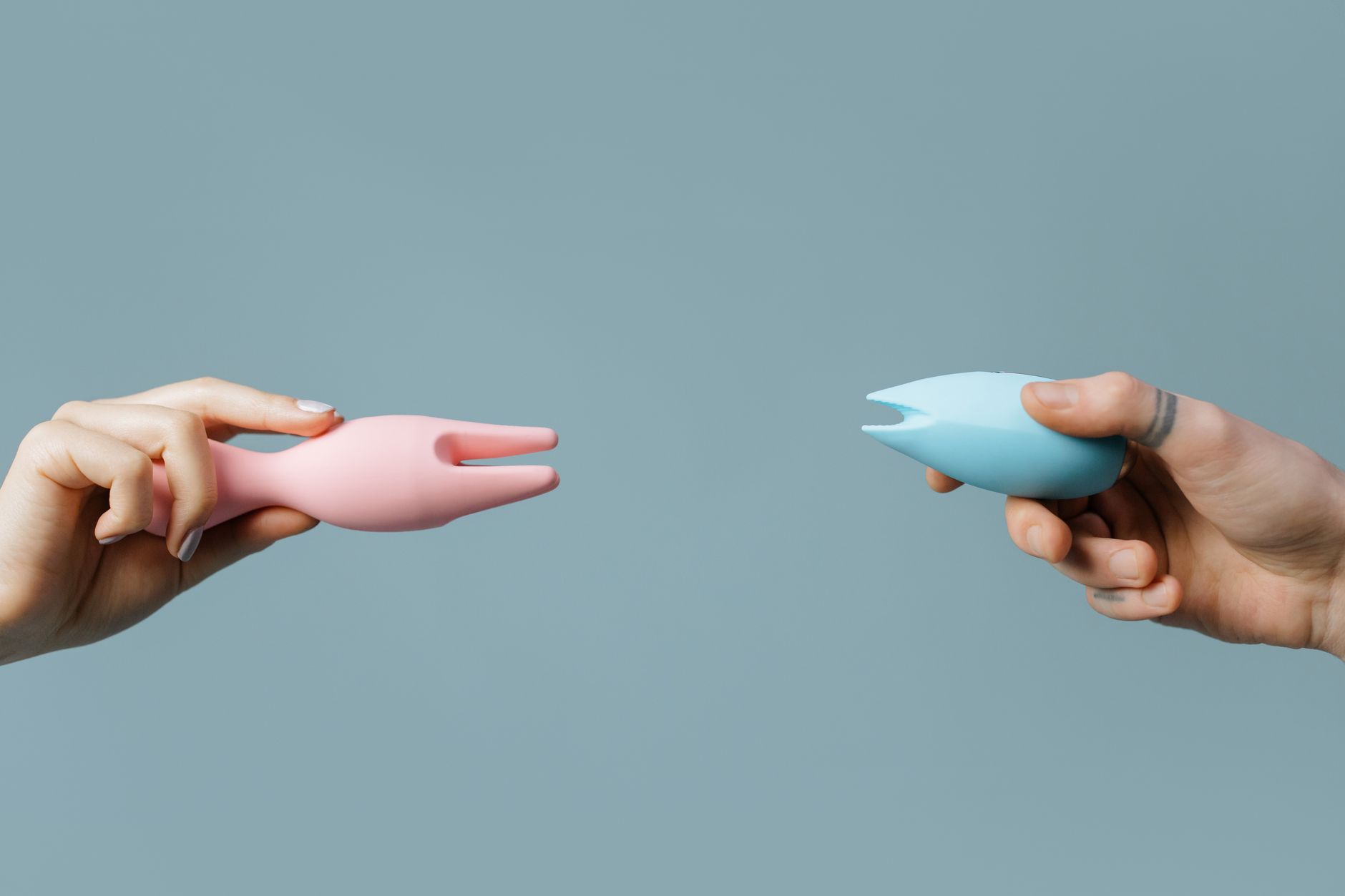
Lemon clitoral vibrators, especially suction-based models, shortcut the physiological barriers that slow arousal. You don't have to negotiate pressure or rhythm with another person. You don't have to worry about their stamina or their comfort level. You get to be entirely selfish with your own nervous system.
That sounds simple, but emotionally it's huge. A lemon vibrator in your hand is a boundary. It says, "This is mine. This happens because I decided." That's not a replacement for partner intimacy. But it is a reset.
Many of my clients report that after three weeks of regular solo play with lemon sexual toys, something shifts. They stop feeling resentful during partnered sex. They stop performing pleasure they don't feel. They show up differently because they're no longer operating from a deficit.
Start with permission, not secrecy
If you're hiding your lemon vibrator, that's worth examining. Not because there's shame in solo play. There isn't. But because secrecy is its own form of disconnection, and you're already disconnected enough.
Some partners react badly to a vibrator because they feel threatened, as if it's a comment on their inadequacy. It isn't. You can name that directly: "This isn't about you. This is about me learning my own body on my own timeline." That's true whether you say it or not, but saying it sometimes matters.
Other partners won't care at all. They might even be relieved. The dynamic where one person is carrying the entire burden of the other's pleasure is exhausting for everyone.
Talk to your partner when you're not in the bedroom and not in conflict. "I want to explore solo play because I deserve to know what feels good to me without time pressure. This is for me, not about anything you're doing wrong." Then do it.
The practical side: how to actually use lemon vibrators when you need permission first
Timing matters. Pick a moment when you have genuine privacy and at least twenty minutes without interruption. You don't need hours. Twenty minutes is enough to warm up, explore a pattern, and actually finish if you want to.
Start with a slower pattern on your lemon clitoral vibrator. Even if faster feels more obvious, slow lets you notice what actually builds arousal instead of just chasing sensation. Many people find that patterns one through three on a lemon vibrator are the actual sweet spot. You can always go faster. You can't un-go fast once you've sensitized your tissue.
Use water-based lubricant if you're someone who needs it. This is non-negotiable if you have any dryness at all. The suction sensation of lemon vibrators is fantastic specifically because it doesn't rely on direct friction the way other toys do, but a little glide helps the sensation feel fuller.
Don't try to orgasm on a timeline. That's the whole point of solo play. You're supposed to discover what your body actually wants when nobody else's timeline is in the room. Sometimes that takes five minutes. Sometimes it takes thirty. Both are fine.
What happens when you reclaim your own pleasure
Something shifts when you stop waiting for permission. I've watched this in my practice dozens of times. People who start using lemon vibrators and adult toys regularly, on purpose, for themselves, begin to show up differently in their relationships.
They stop over-accommodating. They stop pretending. They ask for what they actually want because they've just reminded themselves that what they want matters. They also become less resentful because they're not storing up frustration. Each time you have an orgasm alone with your lemon vibrator, you're not borrowing it from your shared life. You're not keeping score.
That doesn't fix a relationship where your partner actively harms you or refuses to engage with your existence. But it does reset the dynamic where pleasure feels like something you have to earn from another person.
When solo play becomes a conversation starter
After three or four weeks of regular use, your partner will probably notice something. You seem calmer. You're less sharp with them. You're less needy in the way that desperate people are needy.
That's an opening. "I've been using a vibrator regularly and it's changed how I feel," is a complete sentence. You don't owe them details. But if they ask, you can say: "It took the pressure off. I feel less resentful now because I'm not expecting you to fix something I can fix myself."
Sometimes that conversation leads somewhere good. Sometimes it leads nowhere. But you've already changed the situation by changing your own behavior. You're no longer waiting. You're not less connected. You're connected differently, and on terms that don't drain you.
The bigger picture: pleasure as non-negotiable
I work with couples where partners have wildly different libidos, different preferences, different energy levels for sex. The ones who stay happy are the ones who stop treating pleasure like a shared responsibility that one person carries.
Your pleasure is your responsibility. Your partner's pleasure is theirs. Shared pleasure, partnered pleasure, that's something you build together when both people show up. But the foundation has to be that each of you knows how to take care of your own.
A lemon vibrator isn't the answer to a broken relationship. But it is the answer to "I need to remember that my orgasm is allowed to happen," and that's often exactly where healing starts.
Frequently asked questions
Will using a lemon vibrator make me want my partner less?
Actually, the opposite usually happens. When you're regularly satisfied, you feel less desperate during partnered sex. That desperation is what kills connection. Once that's gone, partnered sex can become about actual intimacy instead of fulfilling an unmet need.
Is it weird to use a lemon clitoral vibrator if my partner knows about it but doesn't participate?
Not even a little. Solo play is a normal part of a healthy sex life for most people. If your partner is mature about it, they understand that it's separate from partnered sex, not a replacement for it. Many partners actively prefer it because it means you're handling your own needs.
What if my partner says they feel insecure about the vibrator?
That's their insecurity to work through, not your responsibility to fix by not taking care of yourself. You can be kind about it. "I'm not using this because you're not enough. I'm using it because I deserve to understand my own body." But you still get to use it. Their comfort does not come at the cost of your pleasure.
How often should I use a lemon vibrator for solo play?
There's no magic number. Some people love it daily. Some prefer two or three times a week. The only metric that matters is whether it feels good and whether it's changing how you feel about yourself. If you're using it as a stress reliever and it's working, keep going. If you're using it to avoid something harder, that's worth looking at.
Can lemon vibrators actually help if the real problem is my relationship?
They can help you get clarity on whether the real problem is your relationship or whether it's just that you've been functioning in a state of unfulfilled need. When you're regularly satisfied, you can see your partner more clearly. Sometimes that means the relationship is actually fine. Sometimes it means you can finally see that it isn't.
What if I'm worried about getting too used to a vibrator and not enjoying partnered sex anymore?
Your body adapts to what feels good. That's a feature, not a bug. If partnered sex feels less intense after solo play, it's not because the vibrator ruined you. It's because your body learned what intensity actually feels like. You might need your partner to adjust. You might need longer foreplay. You might discover that partnered sex is about something other than the physical intensity. That's all information you couldn't have without knowing what you actually like.
The real conversation
Your pleasure is not a luxury. It's not something you earn by being a better partner or a better person. It's foundational to feeling okay in your body and your relationship.
When you start using lemon vibrators or any adult toy for yourself, you're not settling. You're not giving up on your partner. You're deciding that your orgasm is allowed to happen, with or without them. That decision changes everything.
If you're ready to explore this more deeply, whether it's about solo play, relationship communication, or figuring out what you actually want, reach out. That's what I'm here for.