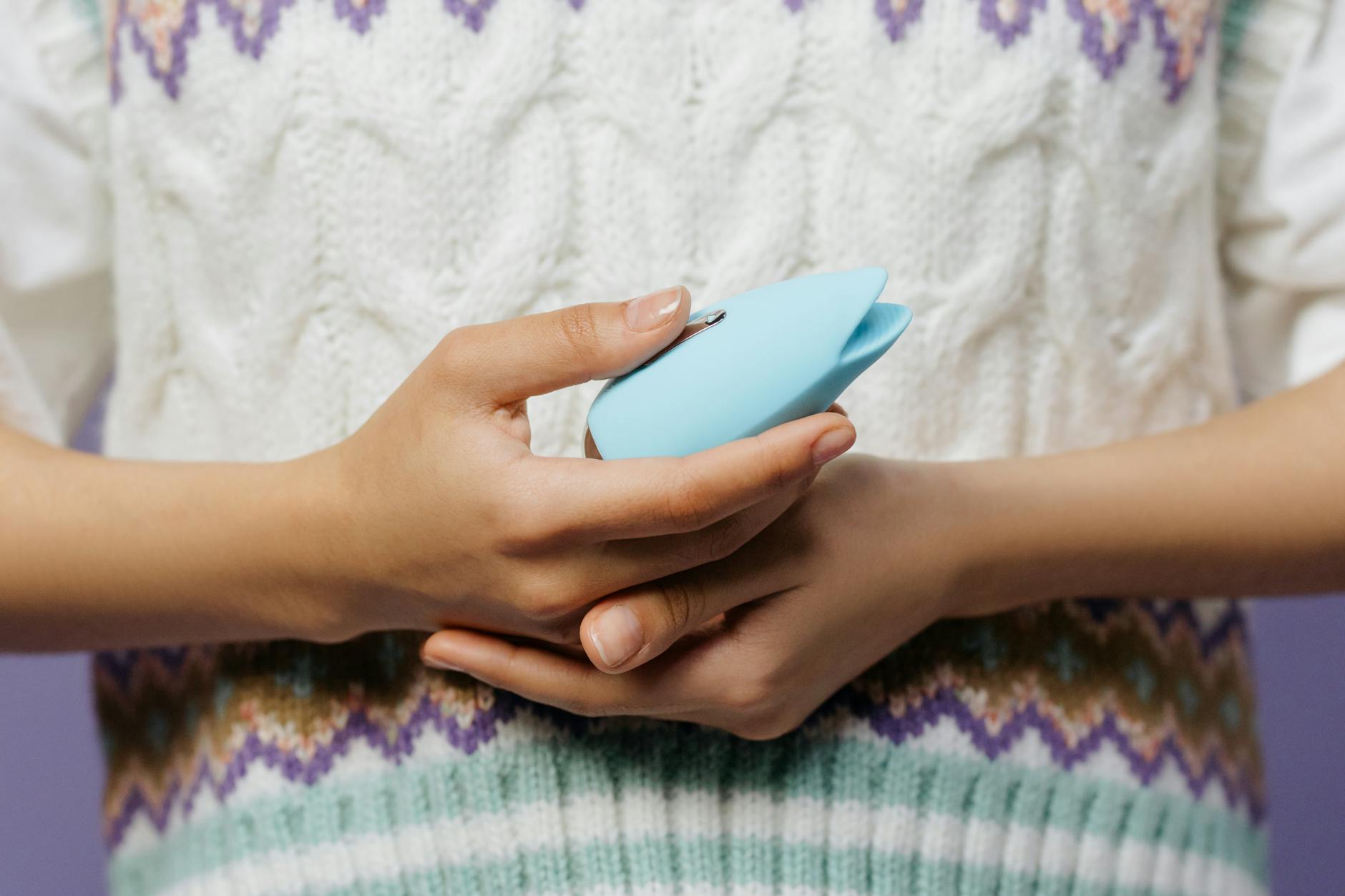
How to Use Lemon Vibrators When You're Starting Over After Divorce
Let's talk about the part nobody mentions
Divorce scrambles a lot of things. Your living situation, your finances, your sense of identity, your relationship with your own body. Most conversations about post-divorce healing focus on emotional recovery or financial stability. Nobody talks about pleasure. But pleasure matters, and rebuilding it is a legitimate part of moving forward.
Here's what I see in my practice: people coming out of long marriages often feel disconnected from their own desire. Sometimes it's because sex became obligatory or complicated. Sometimes it's grief mixed with relief. Sometimes it's just that you've spent years calibrating your body around someone else's needs, and now you don't know what you actually want anymore. That's normal. That's also fixable.
Lemon vibrators, specifically, can be a really gentle re-entry point. Not because they're some magic fix, but because they take the pressure off and give you agency back.
Why the transition from partnered sex to solo play feels strange
Your nervous system has been trained over years (or decades) to respond to a particular dynamic. Your body knows how to respond to another person's touch, another person's rhythm, another person's presence. Solo play asks your nervous system to do something different: to focus entirely on sensation without the cognitive load of another person in the room.
That shift can feel awkward or even a little fake at first. That's fine. It doesn't mean you're broken. It means your body needs a minute to remember how to be solo and aroused at the same time.
Lemon vibrators help with this transition because they offer consistent, external stimulation that doesn't depend on your mental state or your performance. You don't have to think about whether you're doing it right. You're just experiencing what feels good.
The permission piece is bigger than you think
After divorce, a lot of people say something like: "I don't know if I'm allowed to just focus on my own pleasure." That guilt or confusion often runs deeper than you'd expect. Maybe sex in your marriage was about obligation or duty. Maybe it was tied to connection, and now that connection is gone, so the desire seems to have gone with it. Maybe pleasure itself got tangled up with the relationship, and now it all feels too complicated to touch.
Here's what I tell people: your pleasure is not something you owe anyone. It's not a performance. It's not proof of anything. It's just something that belongs to you.
Using a lemon vibrator alone is one of the clearest ways to establish that boundary for yourself. You're not doing this for anyone. You're doing it because your body is yours, and it deserves attention.
Starting slow: the first few weeks
If you're brand new to solo play or to lemon vibrators specifically, don't pressure yourself to have a particular outcome. You're not trying to orgasm. You're not trying to feel a certain way. You're just experimenting with sensation.
Start with a lemon clitoral vibrator on the lowest setting. Set aside maybe 15-20 minutes when you won't be interrupted. No performance pressure, no goal. Just you and your body in a quiet space.
If it feels strange or uncomfortable, that's data, not failure. Take a break. Try again another day. If it feels good, even just "mildly interesting," that's a win. You're rebuilding a relationship with your own body.
Many people find that the suction-style stimulation of a lemon vibrator is gentler to ease back into solo play than traditional vibration. It's less jarring, less intense, more rhythmic. That can make a difference if you're nervous or tense.
When anxiety shows up mid-session
This is really common post-divorce. You're in the middle of feeling something good, and suddenly a thought pops in. Maybe guilt. Maybe a memory. Maybe a worry about the future. Your nervous system hits pause.
When this happens, don't fight it. Don't try to push through. Just pause. Take a few deep breaths. Notice that you can stop whenever you want, and restarting is also fine.
The fact that you can turn the stimulation on and off whenever you choose is actually healing. You're reclaiming control. After spending years (or even just recent months) in a dynamic where you weren't fully in charge, that autonomy matters.
Some people find it helpful to ground themselves first: notice five things you can see, four you can touch, three you can hear, two you can smell, one you can taste. Then, when you feel steady, try again. No rush.
Building a rhythm that works for your healing timeline
There's no "right" frequency for solo play post-divorce. Some people want to explore several times a week. Some want to go much slower. Both are okay. The point is that you get to decide. You're not scheduling sex around anyone else's needs or preferences.
What I've noticed: people heal faster when they approach their own pleasure with curiosity instead of obligation. So instead of "I should masturbate," try "I'm curious what that feels like today." If the answer is "not interested," that's legitimate. If it's "yes, actually," then you know what to do.
Using a lemon vibrator when you do want to explore means your focus stays on sensation and pleasure instead of getting tangled up in technique or performance. The device does the work. You just receive.
Reconnecting with desire as part of your identity
One thing I see a lot in my practice is people rediscovering that desire is not the same thing as their relationship. After divorce, sexuality can feel like it belongs to the past. That can be really isolating.
But pleasure, desire, and sexuality are part of you. They don't require a relationship to be valid or real. You can be single and sexual. You can be solo and aroused. You can use a lemon vibrator and feel like you're reclaiming a part of yourself that got buried or compartmentalized during the marriage.
That reclamation is actually part of healing. It's saying: I'm whole. I'm still myself. My body is not defined by my relationship status.
The difference between healing and rushing
I want to be clear: using a lemon vibrator is not a substitute for actual emotional healing. If you're grieving the relationship, that grief is valid and it takes time. If you're processing betrayal or resentment, that also takes time and often needs support from a therapist or counselor.
But pleasure and healing can happen in parallel. They're not the same thing, but they also don't have to be in conflict. Reconnecting with your own body, at your own pace, with tools like lemon vibrators that give you full control, is part of a fuller picture of coming back to yourself.
When to expand your exploration
After a few weeks of solo play, if you feel curious and ready, you might experiment with different patterns, higher intensity levels, or different types of touch alongside the lemon vibrator. But only if it feels good. Only if you want to. There's no timeline for this.
Some people find that exploring their own pleasure solo gives them clarity about what they actually want in future relationships. That's valuable. Some people find that they're perfectly happy with solo play for a long time, and that's also valid.
The point is that you get to find out. No one gets to decide for you anymore.
A note on patience with yourself
Healing from divorce takes time. Rebuilding your sense of yourself as a sexual being takes time. Reconnecting with pleasure takes time. There's no rush. Your lemon vibrator will be there whenever you're ready. There's no deadline. There's no performance standard you have to meet.
You're starting over. That's actually an opportunity. The chance to learn what feels good without any of the old baggage or complications. To be selfish about your own pleasure in a way that feels radical and necessary.
That's worth taking your time with.
People also ask
Is it normal to feel awkward using a lemon vibrator after being married for a long time?
Completely normal. Your nervous system has been trained around partnered sex. Shifting to solo play, especially after divorce, requires your brain to rewire some patterns. That takes a minute. The awkwardness usually fades after a few times. If it doesn't, talking to a therapist who specializes in sexual health can help.
How long does it take to feel comfortable with solo play after divorce?
There's no standard timeline. Some people feel ready within a few weeks. Some take months. Some find that curiosity comes and goes in waves, depending on where they are in their emotional recovery. The key is not forcing it. Let your body and mind guide the pace.
Can using a lemon vibrator help rebuild confidence in your sexuality after divorce?
Yes, often significantly. Reconnecting with pleasure on your own terms, in a space where you have full control, can be really powerful for rebuilding your sense of yourself as a sexual being outside of a relationship context. That sense of agency and autonomy is part of what makes it healing.
Should I tell a future partner that I'm using a lemon vibrator?
That's entirely up to you. There's no rule. Some people like to be open about it. Some keep it private. When and how you share that part of yourself is your choice. What matters is that you're comfortable with what you're doing.
What if I'm not experiencing orgasm yet, even with a lemon vibrator?
Orgasm is not the goal of solo play. Pleasure, sensation, curiosity, reconnection with your body. those are the goals. Orgasm might come eventually, or it might not be the focus. Both are completely fine. A lemon clitoral vibrator can help you explore sensation and arousal without tying it to a specific outcome.
Is solo play with a lemon vibrator a sign I'm not ready to date again?
No. Solo play and dating are two different things. You can be exploring your own pleasure while also being open to connection with someone else. Or you can focus on solo play for a while before dating. You get to set the timeline. They're not mutually exclusive.
Starting over after divorce means reclaiming a lot of territory. Your time, your home, your choices, your future. Your pleasure is part of that. A lemon vibrator is just a tool, but it's a tool that gives you control back. And right now, control is probably exactly what you need.