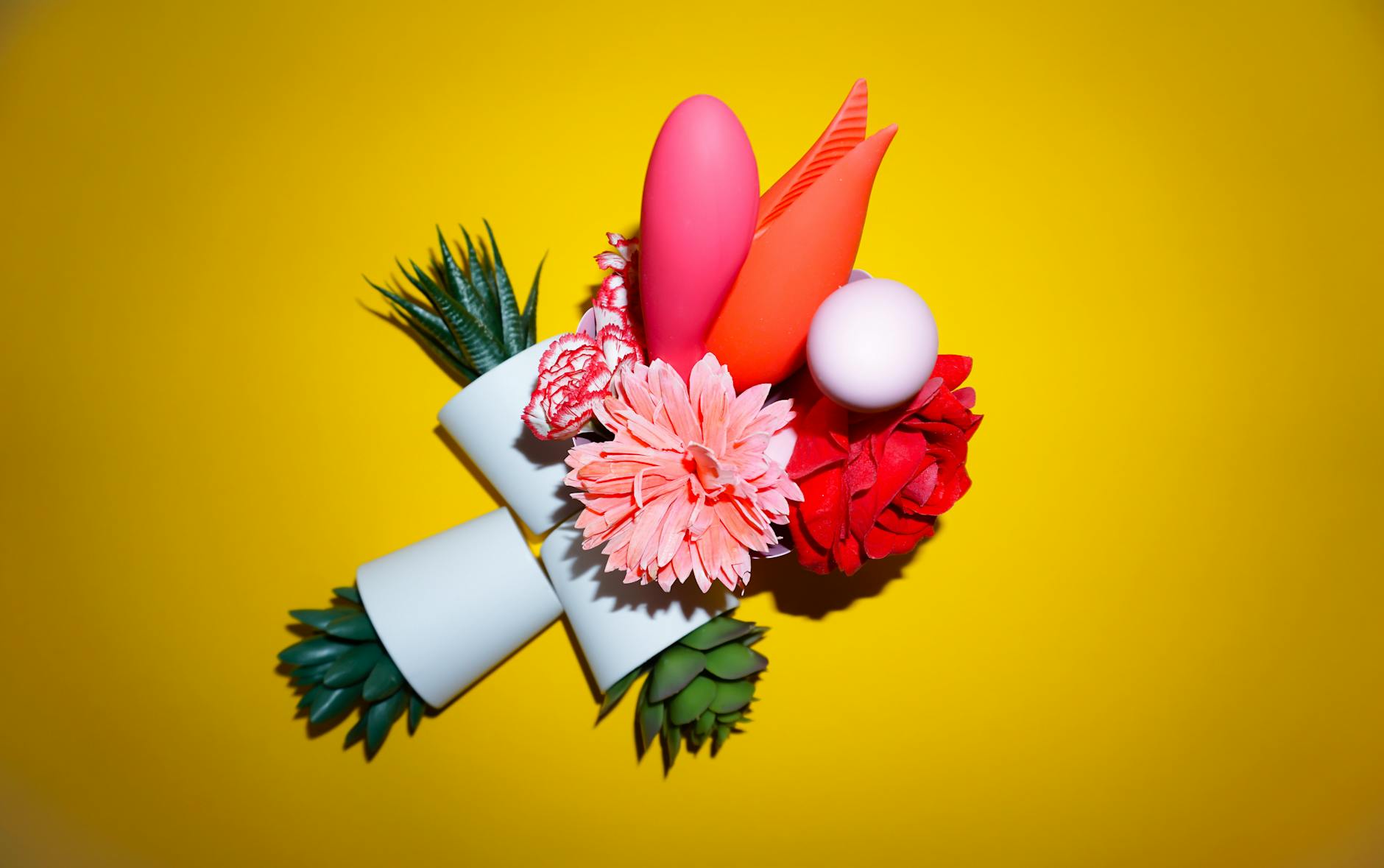
Let's be real about what menopause actually changes
Menopause doesn't end your sex life. What it does do is rewire how your body responds to stimulation. If you've been using lemon vibrators or clitoral vibrators before menopause and suddenly something feels off, you're not broken. Your physiology has shifted, and that requires a small adjustment to your technique and tools.
Here's what I see clinically: women report that their most satisfying orgasms often come after menopause, not before. That's not a polite lie. It's a real pattern. The catch is that getting there requires understanding what's changed and why.
The physiological shifts that matter
When estrogen drops during menopause, tissue throughout your vulva becomes thinner and less elastic. The vaginal lining in particular changes texture and the amount of natural lubrication your body produces decreases significantly. Your clitoris doesn't shrink or disappear, but the tissue around it does change, which can alter how directly you experience stimulation.
Tessue changes also affect blood flow. Arousal takes longer because the vascular response is slower. Where you might have felt a full response in five minutes before menopause, your body might need fifteen or twenty minutes now. That's not a problem. It's just information.
The pelvic floor loses some support from estrogen too. Many women notice that orgasms feel subtly different—sometimes shallower, sometimes more diffuse, sometimes actually more intense because the sensation is concentrated differently. Your nerve endings remain intact. The way signals travel through those nerves shifts slightly.
Why lemon vibrators behave differently post-menopause
A lemon clitoral vibrator like the Lem works through gentle suction and pulsation. Before menopause, your tissue is thicker and more resilient, so you might tolerate higher intensity right away. After menopause, thinner tissue means lower intensity feels better initially, and you build up gradually.
The suction mechanism itself is actually ideal for post-menopausal bodies because it creates a seal without the direct friction that can feel uncomfortably intense on delicate tissue. Air-suction toys distribute pressure differently than vibration-only devices. Many of my clients find that lemon suction vibrators work better for them after menopause than traditional vibrators ever did, but only if they adjust their approach.
Lubrication becomes essential not because something is wrong with you, but because the reduced natural lubrication means the seal and sensation work differently. Without adequate lubricant, suction devices can feel sticky or uncomfortable rather than pleasurable.
What actually doesn't change (the important part)
Your clitoral nerve density stays the same. The neural pathways for arousal don't disappear. Your brain's capacity for pleasure doesn't decline. The ability to orgasm remains fully intact—often intensely so. Many post-menopausal women report deeper, more full-body orgasms than they experienced in their younger years. That's because you've had decades to understand your own body, you're not cycling through hormones that affect mood and energy, and you're often freed from fertility anxiety.
Your desire doesn't vanish either. What sometimes happens is that the cultural narrative around menopause tells you that you should be less interested in sex, so you talk yourself out of exploring. That's a story, not a fact.
The practical adjustments that work
Here are four changes that make lemon vibrators feel genuinely good again after menopause.
Start with water-based lubricant, always. Use it generously. Silicone-based lubes feel richer, but they can degrade silicone toys—and most lemon sexual toys are silicone. Water-based lubricant creates the right glide for suction devices and compensates for the natural lubrication loss. This single change transforms the experience for most women.
Begin at lower intensity settings. If your lemon clitoral vibrator has multiple patterns or intensity levels, start at pattern one or two instead of jumping to maximum. Your tissue will communicate what it needs. You can build intensity once you're aroused. Early on, gentleness is stronger than force.
Budget more time for warm-up. Arousal takes longer after menopause. Fifteen to twenty-five minutes of foreplay or self-touch before introducing a vibrator is realistic now, not a failure. This isn't a bad thing—it's an opportunity to slow down and notice what's actually working for your body instead of rushing to an endpoint.
Pay attention to your pelvic floor. Estrogen loss makes the pelvic floor tighter and less flexible. You might think Kegels are the answer (and they help), but the equally important skill is learning to relax and release the pelvic floor fully. Tension blocks sensation. Consciously relaxing before and during stimulation opens everything up.
When lubrication loss is more than just inconvenient
If dryness is severe enough that lovemaking (with or without toys) causes pain, that's genitourinary syndrome of menopause, or GSM. It's real, it's common, and it's highly treatable. Topical estrogen creams work locally on tissue without significant systemic absorption. A menopause-informed doctor or gynecologist can prescribe them, and most women notice improvement within two to three weeks.
Don't wait out pain. Pain during sex isn't something to manage around—it's something to treat directly. Your pleasure matters, and it's worth the conversation with a healthcare provider.
The mental shift that matters as much as the physical one
Menopause often arrives with other midlife transitions—children leaving home, career shifts, relationship recalibrations, identity changes. The temptation is to blame every change in your sex life on hormones. Sometimes that's accurate. Often, there's emotional stuff tangled up in there too.
If you're in a partnership, separating the two conversations helps. Your body responding differently is one conversation. Your relationship needing reconnection is a different one. Confusing them turns both into dead ends.
Self-pleasure during menopause is also an act of reclamation. You're not trying to recreate what sex felt like at twenty-five. You're discovering what it feels like now, with your real adult body, after decades of experience. That's often richer.
The role of hormonal support
Some women find that hormone replacement therapy (HRT) changes the sexual experience significantly. If you're considering HRT, one benefit worth discussing with your doctor is how it can restore some tissue elasticity and improve natural lubrication. You don't need HRT to have great sex after menopause, but it's one tool that helps some women reclaim sensation more quickly.
There's also testosterone therapy, which is worth exploring if desire has completely flatlined. Testosterone contributes to desire in all bodies with vulvas. Low testosterone is treatable, and the results can be profound.
Why your best sexual chapter might be ahead
Menopause isn't a deadline. It's a transition. The stereotype says that sexuality ends after fifty. The clinical reality is messier and often better. You have decades of sexual knowledge. You're not performing for anyone but yourself. You understand your own pleasure in ways you couldn't at twenty. You have permission to experiment in ways that midlife responsibility sometimes doesn't allow until later.
A lemon clitoral vibrator or other quality lemon sexual toy can be part of that chapter. The key is treating the changes with information rather than shame. Adjust your technique. Use better lubrication. Give yourself more time. Notice what actually feels good now. And if something feels wrong, get it checked out.
Your pleasure doesn't disappear after menopause. It transforms. What's on the other side of that transformation is often deeper, more intentional, and more satisfying than what came before.
People also ask
How long does it take for lemon vibrators to feel normal again after menopause?
Most women notice improvement in sensation and comfort within two to four weeks of consistent adjustments—better lubrication, longer warm-up time, and lower initial intensity. If you're using topical estrogen cream (with your doctor's approval), tissue changes accelerate, and many women report significant shifts within three weeks. It's not about the toy feeling "normal" again. It's about discovering what normal feels like now, and that takes patience.
Can I still use lemon suction vibrators after menopause?
Absolutely. In fact, many women find that air-suction devices like the Lem work better post-menopause than traditional vibrators because suction distributes pressure without direct friction that can be uncomfortable on thinner tissue. The adjustment is in how you use them—more lube, lower initial intensity, longer warm-up—not whether you can use them at all.
Does menopause permanently change how orgasms feel?
Yes and no. Your body's physiology changes, so the physical sensation shifts. But most women report that post-menopausal orgasms are deeper and more satisfying, not weaker. You're often more relaxed, less distracted, and more focused on your own pleasure. The change is real, but it's frequently an upgrade, not a downgrade.
Is it normal for sensation to feel numb or reduced after menopause?
Reduced sensation is common but not inevitable. It's usually a combination of tissue changes and sometimes reduced engagement because of cultural messaging that tells women their sexuality ends. If numbness is extreme or came on suddenly, talk to your doctor about whether HRT or other treatments might help. For most women, adjusted technique and better foreplay restore sensation significantly.
Does lubrication really make that much difference with lemon clitoral vibrators?
It makes almost all the difference. Post-menopausal tissue is more delicate and dries more quickly. Without adequate water-based lubricant, suction devices can't create the right seal, and friction increases. With good lube, the same toy feels entirely different—smoother, more pleasurable, and more effective. Don't think of it as a sign something's wrong. Think of it as the equivalent of adjusting the temperature of water for a shower.
Should I try HRT before using vibrators again after menopause?
No. You don't need HRT to enjoy lemon vibrators or other toys after menopause. You can have excellent sexual experiences with the right technique and tools right now. HRT is helpful for some women and worth discussing with your doctor if you have other menopause symptoms, but it's not a prerequisite for pleasure. Start with the adjustments that cost nothing—better lube, more time, lower intensity—and see what shifts.