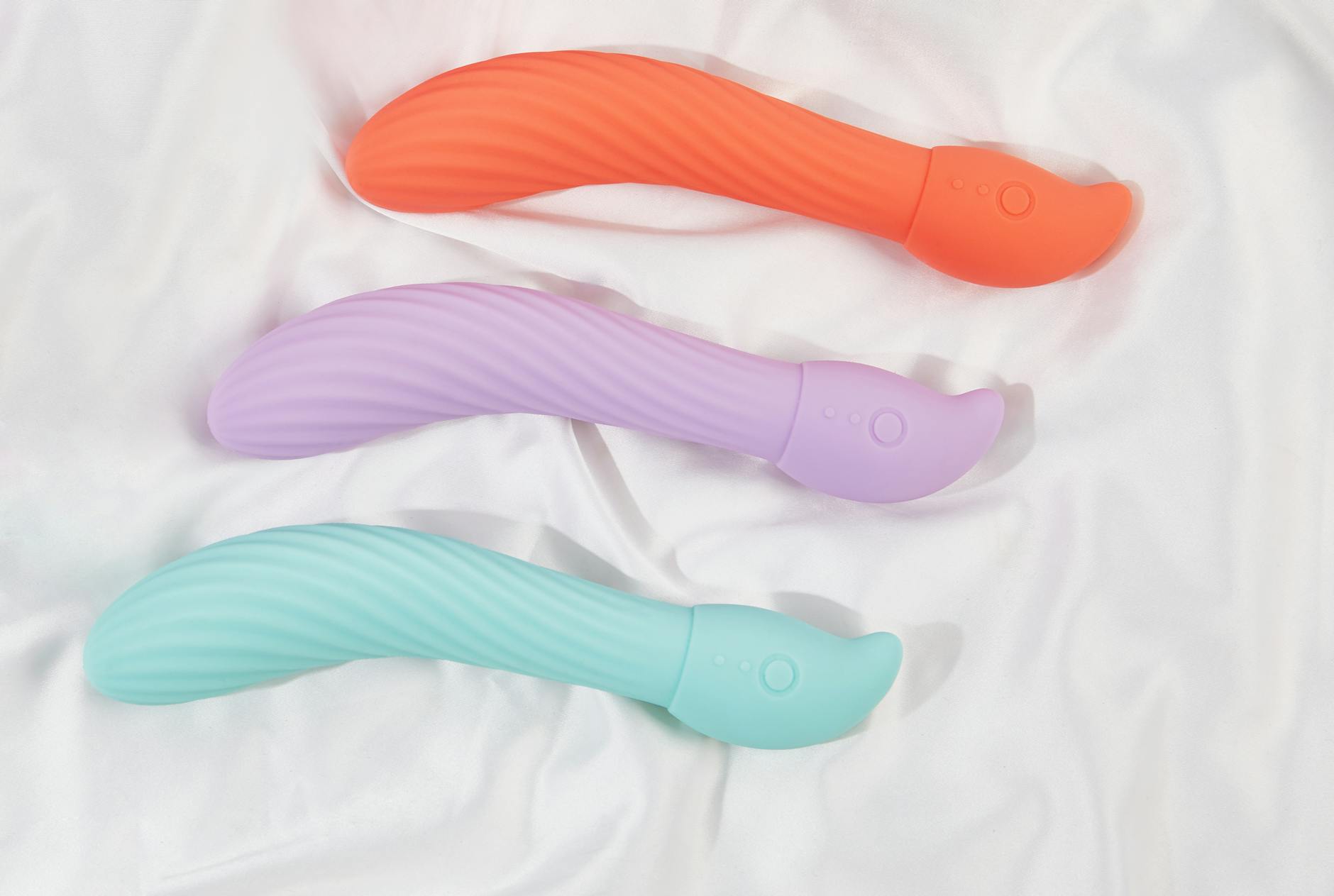
Here's what nobody tells you about clitoral anatomy
Two people can use the same lemon clitoral vibrator and have completely different experiences. Not because one person is doing it wrong. Because clitoral anatomy varies as much as faces do. The size, shape, and positioning of your clitoris, the sensitivity of the glans, the prominence of the hood, the distance between your clitoris and vaginal opening, the thickness of surrounding tissue. All of it changes the game.
I see this show up constantly in my practice. One client swears by the suction sensation of a Hello Nancy lemon vibrator and reaches orgasm in minutes. Another tries the exact same toy and feels almost nothing. Neither is broken. Their anatomy is just different.
Understanding this is the difference between a toy that feels mediocre and one that genuinely works for your body.
The clitoral anatomy spectrum
Your clitoris has external and internal parts. Most people know about the glans (the visible tip) and the hood (the skin that covers it). Fewer know that the clitoris extends internally as bulbs and crura running along the vaginal canal. The glans itself can range from the size of a pea to the size of a marble. The hood can be thick and protective or thin and less coverage. This isn't variation within normal. It's normal.
When you're shopping for a lemon vibrator or any clitoral toy, what matters is how the toy's shape and stimulation pattern match your particular anatomy. A toy with a narrow tip is brilliant if your clitoris sits recessed under a pronounced hood. That same toy can miss entirely if your clitoris is more exposed and positioned further forward.
There's no universal best toy. There's only the best toy for your body.
How stimulation sensation changes with your anatomy
Let's get specific. The lemon vibrator uses suction and pulsing to create sensation. Here's where anatomy shifts the experience.
If your clitoris is larger and more prominent: The suction action will feel direct and intense. You might prefer starting at lower intensity settings because the sensation reaches your nerve endings faster. Many people with more prominent clitoral anatomy reach orgasm quickly with suction toys, which rules.
If your clitoris is smaller or more recessed under the hood: The suction sensation might feel gentler or more diffuse. You might need higher intensity or longer warm-up time because the sensation has to travel through more tissue to reach the nerve endings. This isn't a problem. It just means knowing your settings matters more.
If your clitoris sits far forward (away from your vaginal opening): A toy like the Lemon works particularly well because you can position it exactly where you need it. Internal vibrators or wand vibrators might not reach the right spot as easily.
If your clitoris is positioned closer to your vaginal opening: You have more flexibility with toy placement and can experiment with angles that blend clitoral and vaginal stimulation.
The point: anatomy is real, variation is normal, and knowing your own anatomy helps you choose tools that work.
Sensitivity variations that have nothing to do with arousal
Clitoral sensitivity and sexual arousal are completely separate systems. Someone with a highly sensitive clitoris isn't necessarily more easily aroused. Someone with lower sensitivity isn't struggling with desire.
I mention this because I see it trip people up constantly. They assume that if a toy feels too intense or not intense enough, there's something wrong with their arousal or their body's capacity for pleasure. Usually there isn't. There's just a mismatch between the toy's intensity and their individual sensitivity.
Hormones, medications, stress, hydration, your menstrual cycle, how recently you had an orgasm, and just baseline neurological variation all shift sensitivity. The same lemon vibrator might feel perfect one week and too much the next. That's not a failure. That's your body communicating.
The fix is simple: Hello Nancy products come with multiple intensity levels for exactly this reason. Learning what works at different times, in different states, and in different contexts is part of knowing yourself.
The partner angle: explaining the variation
If you're with a partner and your body responds differently to toys than theirs does, it helps to name what's actually happening. "Your clitoris is shaped differently than mine" is not a complaint. It's anatomy. "That setting works for you but feels too intense for me" is information, not rejection.
Most miscommunication around toys comes from assuming that pleasure works the same way in every body. It doesn't. When you both understand that variation is structural and not emotional, it gets easier to explore without defensiveness.
How to figure out what works for your anatomy
Start by getting curious about your own clitoris. Spend a few minutes with clean hands, in good light, looking at your anatomy. Is your clitoris more visible or tucked under the hood? Does it sit forward or back? This isn't for vanity. It's data.
When you try a lemon vibrator or any toy, start at the lowest intensity. Give yourself time (15-20 minutes minimum) to see how sensation builds. Notice whether you prefer direct contact or more diffuse stimulation. Whether you like the toy staying still or moving. Whether you need the hood pulled back or prefer it covering your clitoris.
Talk to partners about this too. Someone who's familiar with your body can offer perspective. "When you use your hands there, it feels amazing" is useful information that translates to toy positioning.
If you're consistently not reaching orgasm with a particular toy, before you assume you're not a "toy person," try a different design. The issue might not be you. It might be fit.
Size, shape, and the pressure zone question
One specific variable that matters wildly: pressure zone. Some people climax from broad, gentle pressure. Others need focused, pointed intensity. Some want vibration. Others prefer pulsing or suction.
A lemon vibrator's broad, rounded tip creates distributed pressure across a wider area of your clitoris. This works brilliantly for people who respond to that kind of stimulation. People who climax from more focused sensation might prefer a toy with a narrower contact point.
This is why there isn't one best clitoral vibrator. There's the best one for the specific way your body generates pleasure. Finding it takes a little experimentation, but the information you gather is genuinely useful.
Aging, pregnancy, and how anatomy shifts
Clitoral anatomy also changes with time. Pregnancy and childbirth can shift positioning and sensitivity. Hormonal fluctuations through life stages change tissue thickness and vascularity. Post-menopause, tissue changes are real and measurable.
If you've used lemon vibrators before and suddenly they feel different, your body likely changed. It's not the toy. It's not you. It's just anatomy doing what anatomy does. That usually means adjusting intensity, trying different patterns, or experimenting with positioning. Sometimes it means trying a different toy design altogether.
None of this is failure. It's just the information your body is giving you.
FAQ: Common questions about anatomy and lemon vibrators
Why does my clitoris feel more sensitive some days than others?
Hormones, hydration, stress levels, recent sexual activity, and your menstrual cycle all affect clitoral sensitivity. It's not inconsistency. It's normal biological variation. If you're finding that a toy feels overwhelming some days and perfect others, that's your system working exactly as designed.
Can I have an orgasm if my clitoris is small?
Absolutely. Clitoral size has no correlation with orgasm capacity. The number of nerve endings (roughly 8,000) stays consistent regardless of size. What changes is how those nerves are distributed through the tissue, which can shift sensation quality but not capability. People with smaller clitorises orgasm powerfully and consistently.
What if a lemon vibrator doesn't work for me after reading this?
Then you likely have different sensitivity or a different pressure preference than the toy provides. That's not you failing. It's useful information. Some people need a narrower tip, some need more intensity, some need less. How to Choose Between Lemon Vibrators and Other Clitoral Toys walks through other designs that might match your anatomy better.
Does my clitoral size affect my sex drive?
No. Sex drive is driven by hormones (testosterone, dopamine), psychology, relationship quality, health status, and countless other factors. Anatomy is structure. Desire is something else entirely. You can have a small clitoris and very high libido, or the opposite.
Can my clitoral anatomy change with exercise or pelvic floor work?
Pelvic floor exercises can change how your pelvic floor muscles support your anatomy, which can shift sensation and how easily you reach orgasm. But the actual structure of your clitoris doesn't change. What does change is your ability to create the right amount of tension and relaxation for your pleasure response.
Is it normal for my clitoris to feel tender after orgasm?
Completely normal. The glans of the clitoris becomes engorged with blood during arousal and orgasm. The surrounding tissue becomes temporarily more sensitive. After orgasm, some people enjoy continued gentle stimulation, others need space. That's individual and can change from day to day.
The bottom line
Your clitoris is unique. The way it responds to a lemon vibrator is unique. That's not a problem to solve. It's just anatomy being beautifully, wildly variable. When you stop looking for a universal toy and start paying attention to what your specific body actually needs, that's when pleasure gets interesting.
If you're feeling stuck or frustrated with any toy, the issue is usually fit, not you. Spend time getting curious about your anatomy. Try different settings. Talk honestly with partners. And remember that variation is the rule, not the exception.
Your body deserves a toy that works for it. Start with understanding what it actually looks like and how it actually responds. Everything else follows from there.
Sources
- Puppo, V., et al. (2016). "Anatomy of the clitoris and the female sexual response." Clinical Anatomy, 29(3), 386-389.
- Kilchevsky, A., et al. (2012). "Is the female prostate a 'new' organ?" Nature Reviews Urology, 9, 525-530.
- Karamustafa, S. (2021). "Anatomical variation in female external genitalia: A cross-sectional study." Journal of Sexual Medicine, 18(4), 673-680.