
How Arousal Rewires When You Meet Someone New
Here's what nobody tells you: your nervous system doesn't turn on the same way for a new person. That's not a reflection of how much you like them or how attracted you are. It's neurobiology. Your body has spent years calibrating arousal around a previous partner's touch, their timing, their particular way of kissing you. A new person is information your nervous system hasn't processed yet, which means arousal takes longer to build and feels less automatic.
I see this constantly in my work with couples navigating new relationships. The script people follow is usually shame. "I didn't respond like this before." "Why am I not as turned on?" "Is this a sign we're not compatible?" None of those questions are helpful. What's actually happening is that your body is being asked to learn a new language.
The good news is that lemon clitoral vibrators can be the bridge between where your arousal is now and where it's going. They're not a workaround. They're a tool that helps your nervous system recognize and amplify sensation while you're building familiarity with a new partner.
Why New Partners Trigger a Different Arousal Pattern
When you've been with someone for years, your brain enters what researchers call a "predictive state." Your nervous system anticipates their touch before it happens. That anticipation is what drives arousal. But with someone new, there's no prediction to be made. Your brain is in a constant state of processing novel input, which actually dampens the automatic arousal response.
Think of it like listening to a song you know versus a song you're hearing for the first time. The familiar song hits different because your brain has already mapped the melody. You can relax into it. The new song demands full attention. You're listening for patterns instead of feeling the rhythm.
Add to this the fact that many people carry anxiety when they're beginning something new with a partner. Will they like my body? Will I be able to orgasm? What if my arousal pattern seems weird to them? That cognitive load alone can suppress desire. Your prefrontal cortex (the thinking brain) is running a background program of evaluation instead of letting your body just respond.
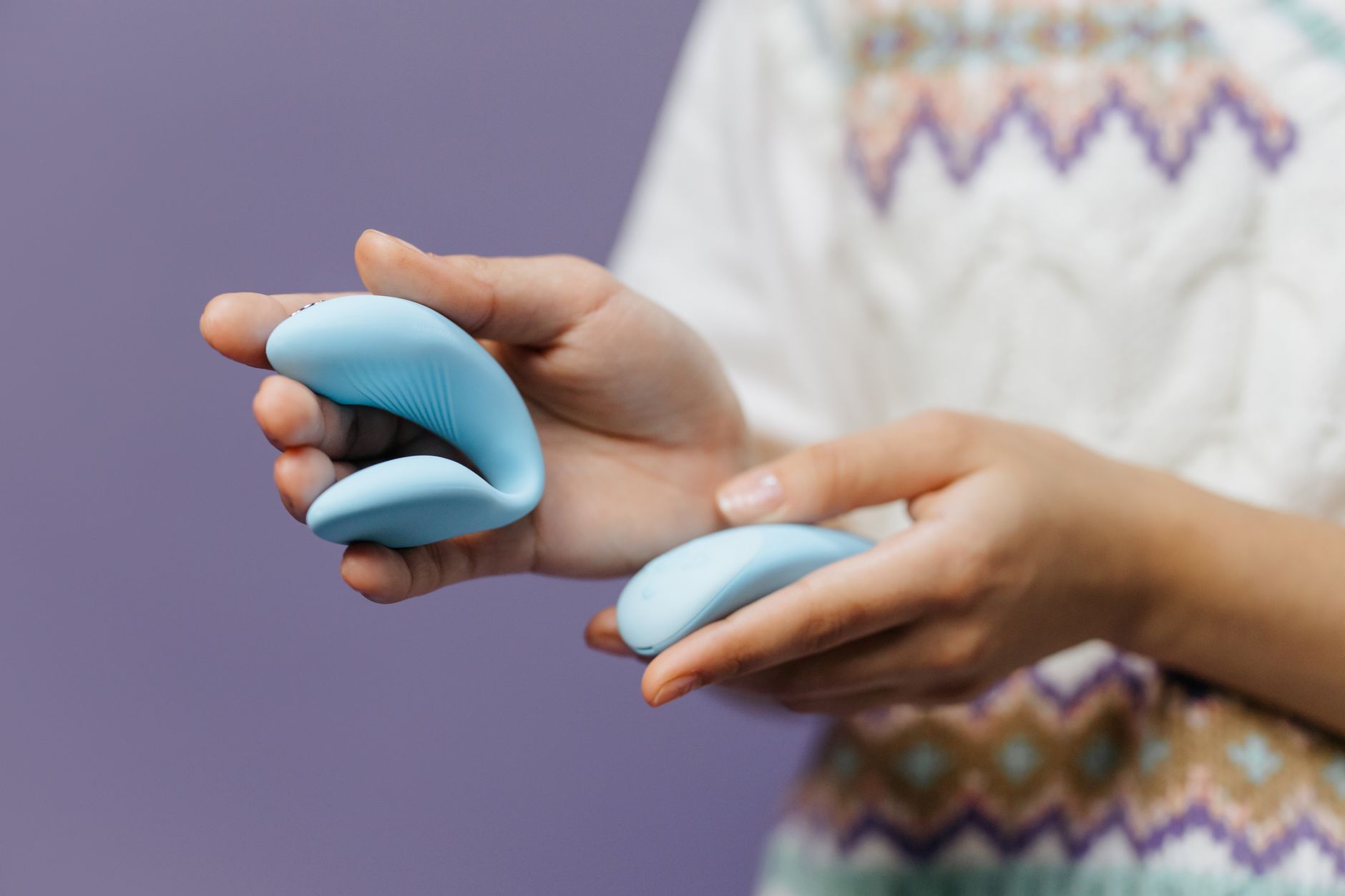
Photo by cottonbro studio on Pexels
A lemon vibrator interrupts that loop. When you introduce clitoral stimulation, your nervous system gets concrete, undeniable sensation. It gives your brain something concrete to anchor to instead of a cloud of "Am I feeling this right?" That clarity often accelerates the arousal process significantly.
How Lemon Vibrators Help You Map New Arousal Patterns
The most useful thing you can do when arousal feels muted with a new partner is to understand your own arousal independent of them, at least initially. This sounds counterintuitive when the goal is to build intimacy, but it's the fastest path to it.
Here's why: if you're frustrated that you're not getting wet as quickly or that your clitoral sensation feels dull, and you're trying to diagnose that problem while also managing a partner's presence and expectations, you're running three processes at once. You're self-monitoring, partner-focused, and trying to troubleshoot. That's a recipe for staying stuck.
Using lemon sexual toys solo first gives you baseline data. How does your body respond to the Lem's suction pattern when there's zero performance pressure? What intensity level wakes up your clitoris fastest? How much warm-up does your body actually need before you feel truly aroused? Once you know that, you have a roadmap. You can then bring that knowledge into partnered sex.
Many people find that when they've explored solo with their lem vibrator, they actually become more confident communicating with a new partner about timing and intensity. You're not guessing anymore. You can say "I respond better to longer warm-up" or "This sensation pattern really works for me." That communication itself builds arousal because it reduces the anxiety loop.
Starting With Your Lemon Vibrator Before Bringing It Into Partnered Sex
The first step is giving yourself permission to use a lemon clitoral vibrator solo while you're in a new relationship. Some people feel like that's "cheating" on the relationship or that they should be able to get there through partnered touch alone. That's a belief worth examining. Your body isn't a test you need to pass with a partner. It's a tool you're both learning to use together.
Start with the lower intensity settings on your lem vibrator. Many people with bodies that haven't been familiar with vibration before jump to high intensity and then feel numb. Your clitoris is sensitive enough that lower patterns often work better for building arousal, especially when everything else in the nervous system is already in novelty mode.
Give yourself at least 15-20 minutes of solo exploration before partnered sex. This isn't masturbation as a separate thing. Think of it as foreplay with yourself that your partner can benefit from. You're arriving to partnered sex already aroused, already knowing what your body wants. That's a gift to both of you.
Introducing Your Lemon Vibrator Into Partnered Sex
Once you've mapped your own arousal, bringing a lemon vibrator into partnered sex often feels much less awkward than people expect. The key is framing it correctly in your own mind first, then communicating it simply to your partner.
Instead of "I need this because I can't get aroused with you," try: "I know my body better when I use this. Let's explore it together." The second statement is accurate and it invites partnership instead of creating defensiveness.
Many new partners are actually relieved. If they've been anxious about whether they're touching you the right way or providing enough stimulation, a lemon vibrator removes that guesswork. You're taking ownership of your own arousal, which paradoxically makes them feel more confident and more connected to you.
Start with your partner outside your body. They can hold the lem vibrator while you guide them on angle and pressure. This gives them a role in your pleasure that doesn't require them to guess. Then, once you're already aroused and the two of you are comfortable together, you can incorporate the vibrator into penetrative sex if that's something you want.
The Nervousness You Feel Is Information, Not a Warning Sign
A lot of the arousal difficulty people experience with new partners is actually just anxiety dressed up as low desire. Your nervous system is in a heightened state because this person is new. That's not pathological. That's your body doing its job of staying alert to new information.
Where this becomes a problem is when you interpret that alertness as "This isn't right" or "I'm not attracted enough." You are. Your system is just being cautious. Using a lemon vibrator during this phase isn't a sign that something is wrong. It's a signal that your body needs more direct stimulation to override the novelty response and get into pleasure.
I've worked with countless people who felt disconnected with a new partner sexually, introduced a lemon clitoral vibrator, and then three months later found that they no longer needed it as much because their nervous system had finally mapped this person's touch. That's the timeline for most people. Not immediately, but months, not years.
When to Expect Arousal to Feel More Automatic Again
The nervous system takes time to build predictive maps. For some people that's three months. For others it's six months. There's no universal timeline, but research on relationship bonding suggests that somewhere between the 6 and 12 week mark, most people start feeling more automatic arousal with a new partner.
That doesn't mean the lemon vibrator becomes irrelevant. Many people keep using it forever because it feels good and it's a familiar part of their pleasure. But the desperation often eases. You're not using it as a bridge to arousal anymore. You're using it because you like it.
Some people worry that if they rely on a lemon vibrator early in a relationship, they'll be dependent on it forever. That's like worrying that if you use a map to navigate a new city, you'll never be able to navigate it naturally. You use the map until you know the streets. Then the map is optional.
What to Watch Out For (and When to Seek Support)
There are a few situations where arousal difficulties with a new partner signal something worth exploring more deeply. If you feel completely numb to a partner's touch even with a lemon vibrator, or if you notice that you're only aroused alone and feel nothing during partnered sex, that might indicate anxiety that's beyond the typical new-relationship phase.
That's not a problem to shame yourself about. It often means your nervous system needs more time or more reassurance. Sometimes it means the relationship itself is activating a deeper pattern of discomfort. Both of those are worth discussing with a therapist, not as a crisis, but as information.
Likewise, if you're using a lemon vibrator and the sensation feels painful or overly intense despite trying lower settings, check in with yourself about whether you're actually enjoying the experience or white-knuckling through it to try to perform arousal. Your pleasure matters more than any particular technique.
FAQ: Arousal and New Partners
How long does it usually take for arousal to feel normal with a new partner?
Most people notice a significant shift somewhere between 6 and 12 weeks of regular intimate contact. That said, "normal" is individual. Some people's bodies click immediately with a new partner's touch. Others need months. Neither timeline means anything about the relationship's future. Your nervous system is just learning.
Is it okay to use a lemon vibrator on the first time with a new partner?
Yes, if you're both comfortable with it. Some people feel nervous introducing a toy early because they worry about seeming high-maintenance. But communication here is gold. If you say, "I want to make sure I'm fully present and aroused with you. Using this helps me get there," most partners respond positively. You're inviting them into your pleasure, not excluding them from it.
What if my new partner seems threatened by the vibrator?
That's a conversation worth having directly. Ask them what's making them uncomfortable. Often it's a worry that they're not enough, or a misunderstanding about what the toy is for. Reassure them that you use it because you know your body, not because they're failing. If they remain uncomfortable after that conversation, that's information about compatibility worth considering.
Can using a vibrator make it harder to orgasm with a partner eventually?
This is a common worry and largely a myth. Vibrators don't "desensitize" you the way some people fear. Your clitoris is complex. Using one stimulation method doesn't make you unable to respond to others. If anything, understanding your arousal through a vibrator often makes you better at communicating what works to a partner.
Should I use a lemon vibrator every time we have sex if it's new-relationship arousal?
No. Use it when you need it. As your nervous system adapts to this partner, you might find you use it less frequently. Or you might keep using it because it feels great and you like the sensation. Both patterns are healthy. Let it be a choice, not a requirement.
What if the lemon vibrator helps me orgasm but I still don't feel connected to my partner?
That might mean you need more emotional intimacy building alongside the physical exploration. Orgasm and connection aren't the same thing. Sometimes what's needed is longer conversations, more time together outside the bedroom, or deeper vulnerability. A vibrator solves an arousal problem, not a relational one. If the disconnection persists, that's worth exploring with a therapist or relationship counselor.
Moving Forward With Confidence
Your arousal changing with a new partner isn't a defect. It's your nervous system being honest about novelty. That honesty is actually valuable information. It tells you that your body is paying attention, that you're not on autopilot, that there's growth ahead.
Lemon vibrators are tools that help you bridge the gap between where your arousal is now and where it's going. They're not permanent equipment. They're scaffolding. And like all good scaffolding, they can come down once the structure is stable. Until then, use them without shame. Your pleasure matters, and you deserve tools that help you access it.
If you're navigating relationship shifts or want guidance on rebuilding intimacy after transitions, our resources on rebuilding intimacy and reconnecting after major changes might help. And if you'd like to talk through what's working and what isn't in your relationship, reach out to our team.